I still remember the first time I set foot in Rapture, the ocean pressing its watery fingers against glass, the art deco ghosts humming promises of a utopia gone mad. Then Columbia, suspended in the sky like a fever dream, its clouds blushing with patriotism and pain. Those places didn't just house a story—they were the story, breathing and weeping and singing in every rusted rivet. Now, in 2026, I wait for the next city. BioShock 4 has been a whisper on the wind since 2019, a secret cradled by 2K, and the murmurs say it will spread its wings into an open world. And my heart does a little skip. But then I remember another journey I took, one that left me stranded on a broken ring, grappling with emptiness. Let me tell you, Halo Infinite taught me things—beautiful, bitter things—that BioShock 4 would be wise to hear.
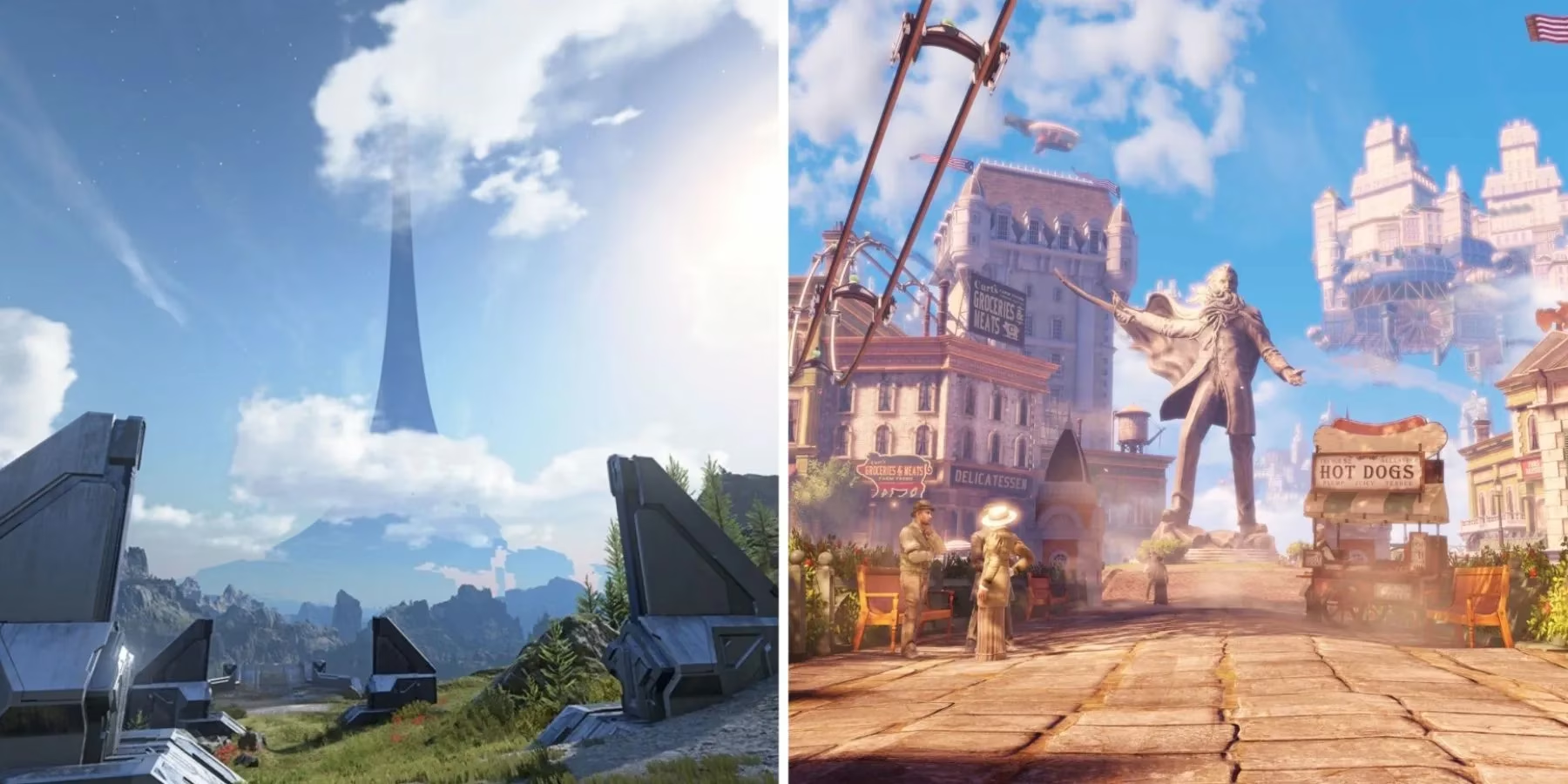
When Master Chief first stepped onto Zeta Halo, the world felt like a held breath. The Grappleshot was a revelation, a metallic spider-sense that let me swing from jagged cliffs and snatch weapons out of the air. I was a ballet of violence, dancing through the pines. But the land itself... it grew tired. The mountains were always green, always rolling, always sighing the same sigh. A world that promised infinity gave me a single note, repeated until it became noise. That’s the first lesson, whispered through the rustle of a Big Daddy’s drill: a living city needs more than one heartbeat. BioShock’s soul has always been its setting. If the new realm is open, let it be a palette, not a monochrome. Let me wander from briny depths to crystalline caves, from overgrown plazas to laboratories where the lights still flicker with old sins. Variety isn't just a feast for the eyes—it's the breath of a world, keeping it from suffocating under its own weight.
And oh boy, did Halo Infinite teach me about silence. After the campaign’s story missions dwindled, Zeta Halo became a beautiful corpse. There were camps to clear, audio logs to chase, but the land felt like a stage after the actors had gone home. I’d grapple to a mountaintop and just... stand there, listening to the wind pretend it had secrets. An open world must hum with purpose. Not the frantic, checklist busywork of a Ubisoft map—please, no, not a thousand icons begging me to fetch their lost trinkets. I need side stories that burrow under my skin, characters who remember my name, encounters that rewrite themselves in my memory. BioShock should scatter its DNA like plasmids: every corner a potential transformation, every stranger a mirror of the city's fractured soul. Let the world feel alive, not just occupied. A splicer singing a broken lullaby, a shopkeeper whose eyes hold a revolution, a child’s drawing scrawled on a wall, half-erased by tears. That’s the marrow of a place I’d truly want to get lost in.
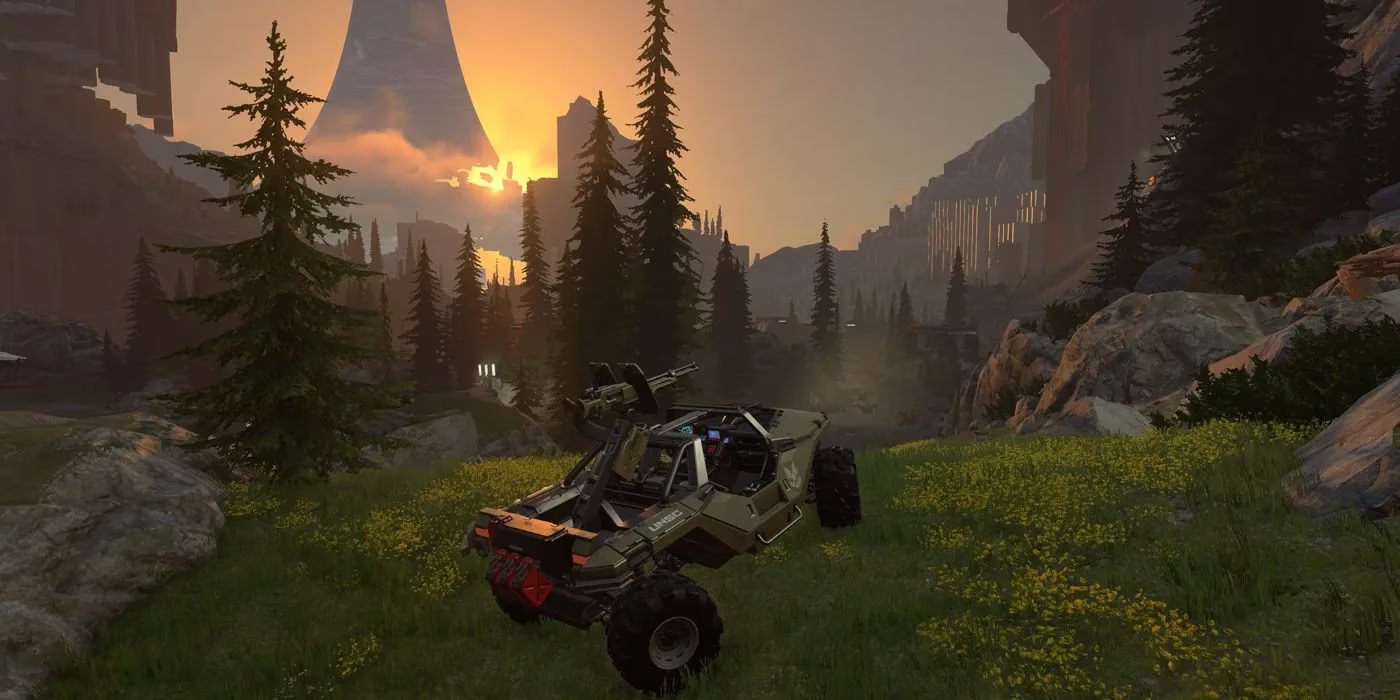
Then there’s the dance of movement. The Sky-Lines of Columbia were a gasp of freedom—I’d zip along rails, leap onto airships, become a bird with a pistol. But Halo’s Grappleshot whispered something deeper: control. I could choose my path, swing into the sun, pull a Jackal’s shield away like tearing paper. BioShock 4 needs a traversal mechanic that feels like an extension of my own body, something that blurs the line between fleeing and fighting. Maybe it’s a wrist-mounted tendril that lets me slingshot through neon canyons, or a plasmid that turns the ground to liquid mercury, letting me surf on waves of reflection. The key is to make movement a conversation, not just a commute. I want to scream with joy as I escape a collapsing atrium, grappling onto a crumbling statue, spinning in the air to fire one last shot.
But here’s the catch—the Grappleshot’s freedom was a cage when the world beneath it was hollow. BioShock must weave its traversal into the tapestry of discovery. Imagine a hidden laboratory only reachable by chaining a series of impossible leaps, a rooftop garden that blooms only when you’ve carried a flame from a forgotten generator. Make the journey the first chapter of every story. I remember the Sky-Line’s thrill, but I also remember how it often deposited me into arenas that felt like boxes waiting to be ticked. BioShock 4 has the chance to make every arrival a revelation, every ascent a thesis on the city’s philosophy.
I’ve been dreaming of this new place for so long—a city that might rest on the seafloor under a dome of bioluminescent stars, or drift through a gas giant’s eternal storm, humming with Tesla-coil lullabies. The open world is not the enemy; stagnation is. Halo Infinite, for all its bravado, became a mirror showing how even a giant can stumble when its landscape forgets to change its clothes. BioShock’s worlds have always been characters: mad, grieving, glorious. Let this new one breathe with contradictions. Let it wear its scars proudly, and never let me walk more than a minute without something tugging at my curiosity—a flicker in the dark, a log from a dead man who still writes poetry, a window that shows me not the outside, but a version of myself I didn't want to meet.
So I wait, controller in hand, hoping the developers have listened to the stories other games have told through their wounds. 2K, take the lesson gently: don’t just build a map. Build a moment that stretches into a decade. I’ll be here, ready to swing, leap, and lose myself in a city that never stops telling me its secrets. Just, please... make it a place worth staying in, long after the credits have rolled.