In the ever-evolving landscape of video games, open-world titles often stand as ambitious monuments to player freedom and developer creativity. As we look back from 2026, it's clear that innovation is a double-edged sword. Some games push boundaries and become timeless classics, while others... well, they stumble under the weight of their own grand ideas. The quest for a bigger, more interactive sandbox has led to some truly memorable experiences, but also to a few that left players feeling a bit let down, you know? Let's take a stroll down memory lane and revisit some of these worlds that promised the moon but delivered something a little less stellar.
The Amazing Spider-Man 2: A Hero's Chore

The film might have had its critics, but gamers hopping into The Amazing Spider-Man 2 were really just chasing that classic PS2-era web-slinging high. The swinging felt alright, but New York City itself? Kinda bland, if we're being honest. The real kicker, though, was that Hero/Villain system. Crimes would pop up all over the map—standard Spider-Man stuff. But ignore too many of them, and suddenly you're public enemy number one, getting swarmed by robots. It turned exploring the city from a joy into a checklist, a constant reminder that with great power comes... a great big to-do list. Talk about pressure!
Fable: A World Divided (By Loading Screens)
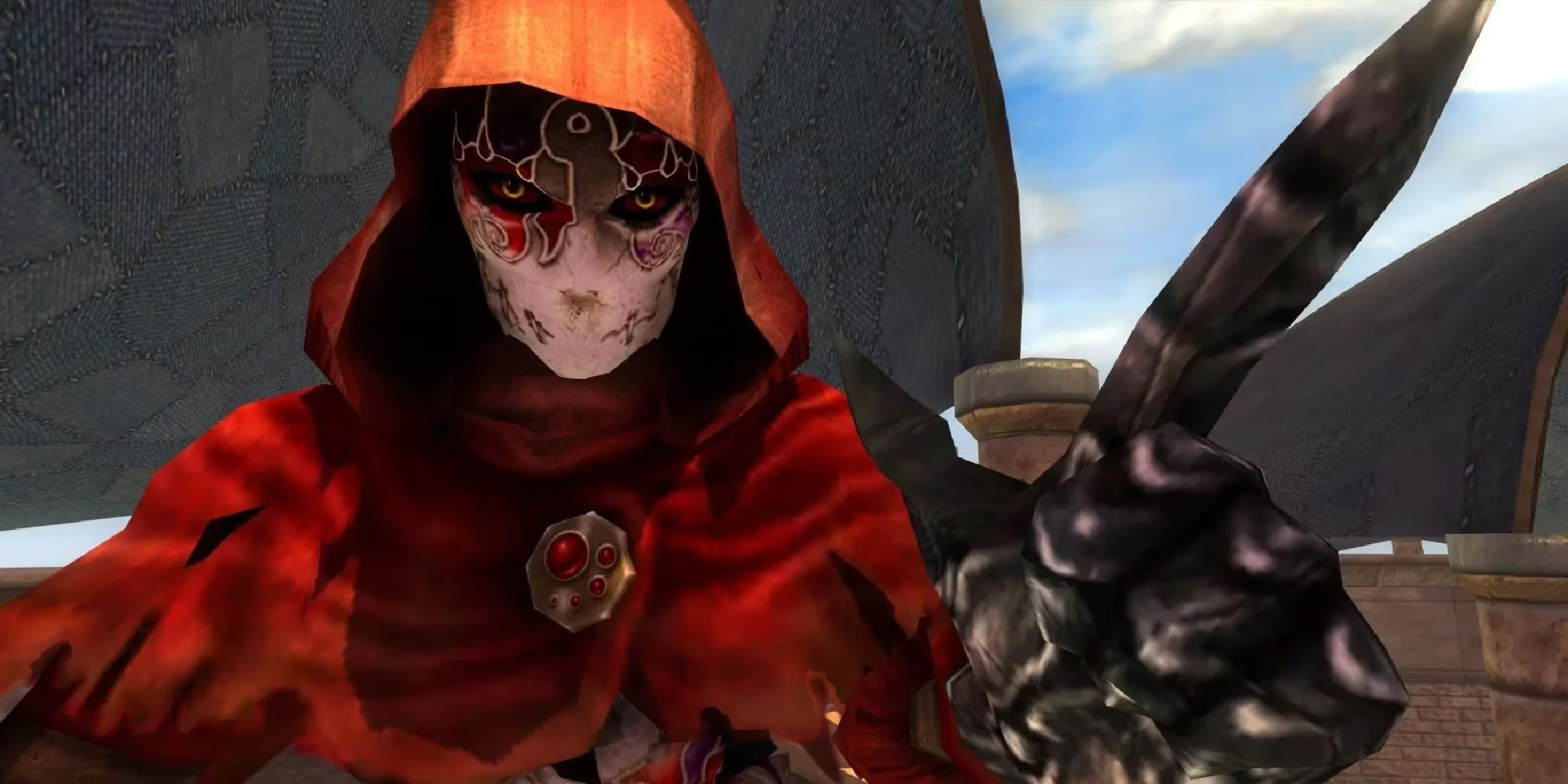
Now, Fable? That game was a pioneer. Its good-and-evil morality system was pure magic—your actions shaped your hero's look and how the world saw you. It was the perfect fit for a fantasy open world... in theory. In practice, getting around that world felt like waiting for paint to dry. Albion was chopped up into regions, each separated by agonizingly long loading screens. We're not just talking between major towns; even the first forest was split into seven separate maps. Seven! You'd spend more time looking at loading screen tips than actually enjoying the consequences of your devilish or divine deeds.
Batman: Arkham Knight: A Lonely Gotham
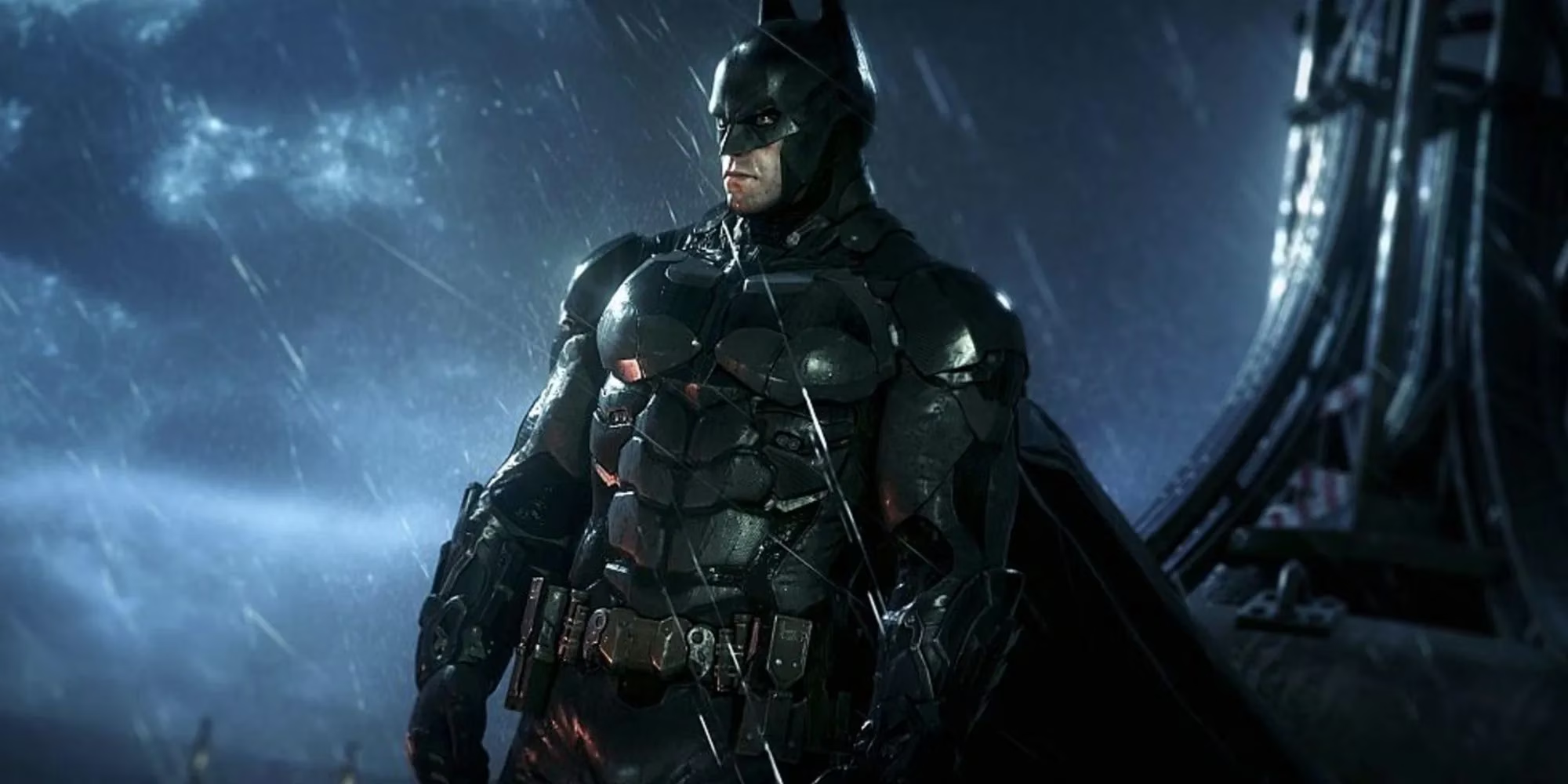
The finale of the Arkham Trilogy gave Batman a slick new suit, but it couldn't mask the problems. Its big innovation—the Batmobile—was also its biggest crutch. Sure, driving it was a blast at first, but the game leaned on it so hard for missions that it started to feel like a tank simulator with occasional fisticuffs. And Gotham City? Completely open, beautifully rendered... and utterly empty. The story evacuated all the citizens, leaving a stunning ghost town where the only pastimes were gliding and beating up the same thugs. For a world that's supposed to be alive, it felt strangely... dead.
| Game | Innovation | Why It Underwhelmed |
|---|---|---|
| The Amazing Spider-Man 2 | Hero/Villain Morality Scale | Punitive system made exploration a chore |
| Fable | Dynamic Moral Alignment | World fragmented by constant loading screens |
| Batman: Arkham Knight | Integrated Batmobile Gameplay | Over-reliance on vehicle, empty open world |
Mad Max: A Barren Wasteland
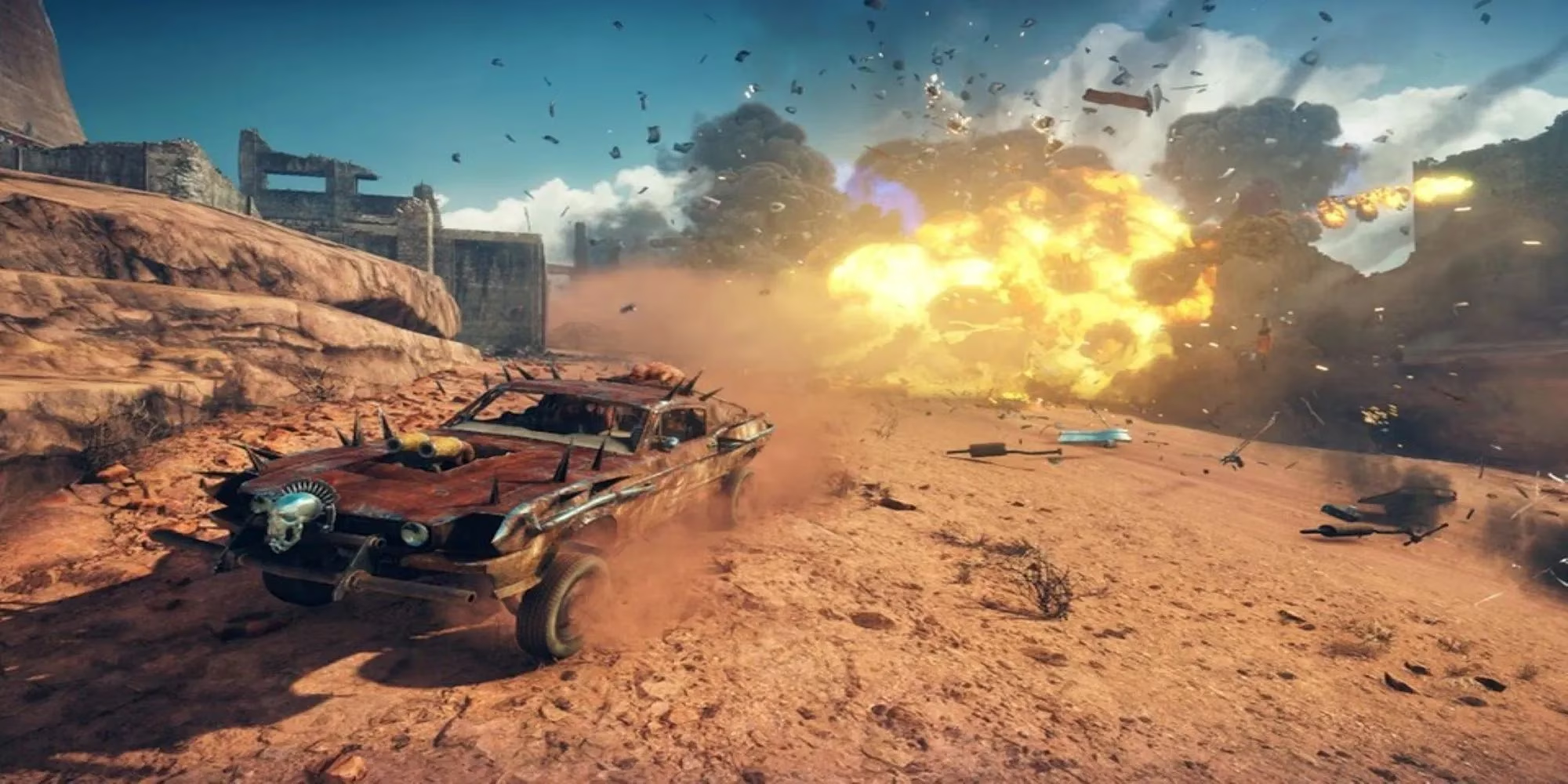
Riding alongside Fury Road, the Mad Max game was a love letter to fans. Its car combat was brutal and brilliant, featuring a clever degradation system where your Magnum Opus would literally fall apart around you. But the world you drove it through? Well, it was a wasteland in every sense. Developers can only do so much with endless sand, and the scenery became painfully repetitive. Finding a rock formation felt like a major event. It was authentic, sure, but after hours of dune-bashing, you start to crave a little more visual variety—or at least a different shade of brown.
Halo Infinite: A Familiar Frontier
Many hailed Halo: Infinite as a glorious comeback for the Chief. The grappling hook was a game-changer, and the core combat was top-notch. But as the first mainline Halo to go open-world, its canvas felt a little... blank. The map was sprawling yet underwhelming, filled with landscapes that felt recycled from older, more linear titles. Once you cleared out the Banished strongholds, there wasn't much reason to stick around. The silence of the ring was less serene and more, "Is that all there is?"
Saints Row (2022): A Broken Playground
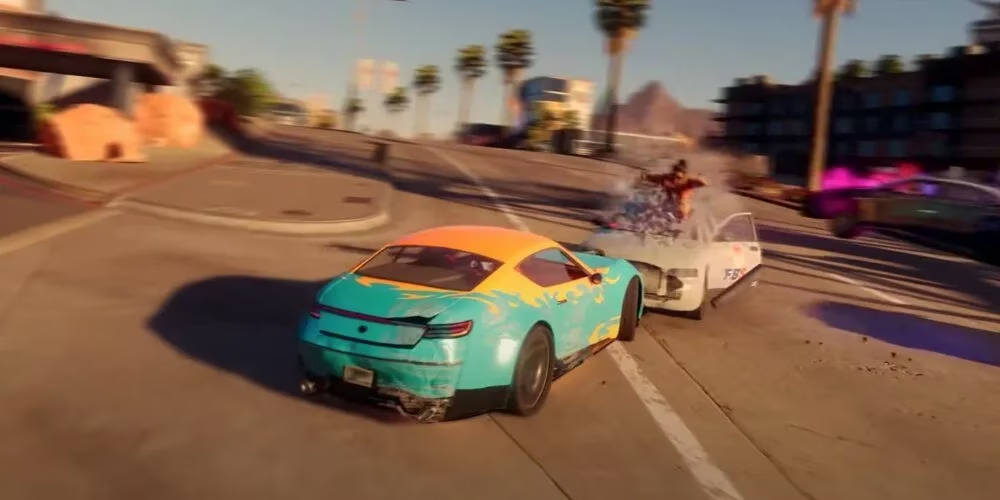
Oh, Saints Row. The reboot was supposed to bring the over-the-top chaos back. What players got was a mess—buggy, rushed, and largely forgotten. The open world didn't just underwhelm; it barely functioned. Cars phased through the asphalt, physics engines threw tantrums, and the whole experience felt unfinished. It's a real shame, because the series' trademark humor filled a vital niche in a world where other crime sims were getting super serious. This kind of innovation had a place, but definitely not in this broken state.
Death Stranding: The Walking Simulator
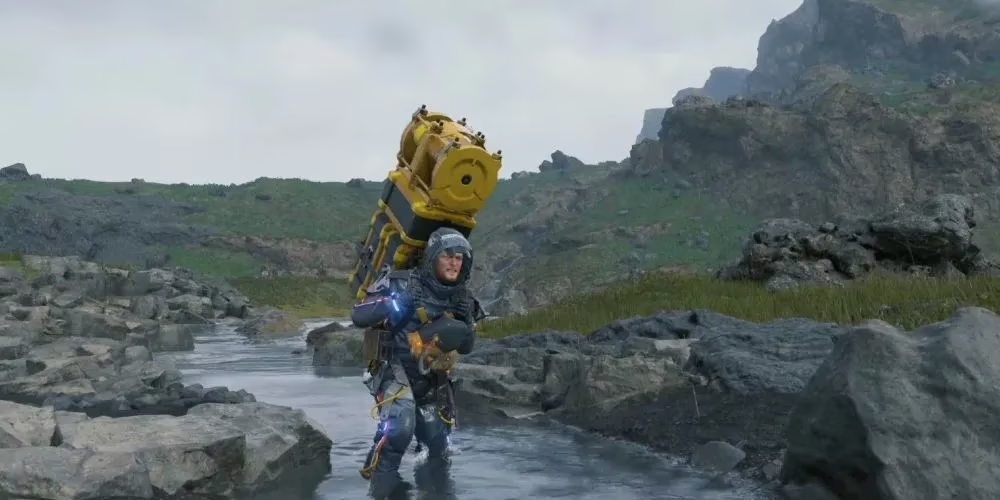
And then there's Death Stranding, the poster child for polarizing open worlds. Hideo Kojima's vision of a dystopian America, where rain ages you to death, is undeniably innovative. Your role? A postman. A very important postman, but a postman nonetheless. The gameplay largely involves trekking for hours across monotonous terrain, desperately hoping the weather holds. It’s a meditative experience for some, an absolute slog for others. The concept of a connected, lonely world is fascinating on paper, but in practice, it asks a simple question: how many hours of delivering packages across identical hills can you handle before you... zone out?
Looking back, these games teach us a valuable lesson. An open world is more than just a big map; it's an ecosystem. Innovation needs to serve the player's sense of wonder and agency, not hinder it. A groundbreaking mechanic can't save a barren landscape, and a beautiful city is worthless if there's no life in it. The best worlds are those that make you forget you're playing a game, where every corner promises a story. These titles, for all their ambition, sometimes reminded us we were just pushing buttons. And in the end, that's the real challenge for any developer daring enough to build a world: making us believe it's worth saving, exploring, or even just delivering mail across.