In the year 2026, the landscape of television is still littered with the ambitious, expensive, and often bewildering attempts to translate video games to the small screen. The question lingers like a stubborn glitch: could the Halo TV show have ever been good? The answer, much like a Spartan's sense of humor, appears to be tragically absent. The show's disastrous debut, which many unfortunate souls endured on airplane screens, wasn't just a failure of execution; it was a fundamental misunderstanding of what makes its source material tick. While The Last of Us paved a golden brick road to Emmy glory, it also unleashed a tsunami of greenlights for every game with a recognizable logo, leading to a critical juncture: when does an adaptation honor its roots, and when does it simply become generic sci-fi with a famous brand slapped on the poster like a last-minute sticker?
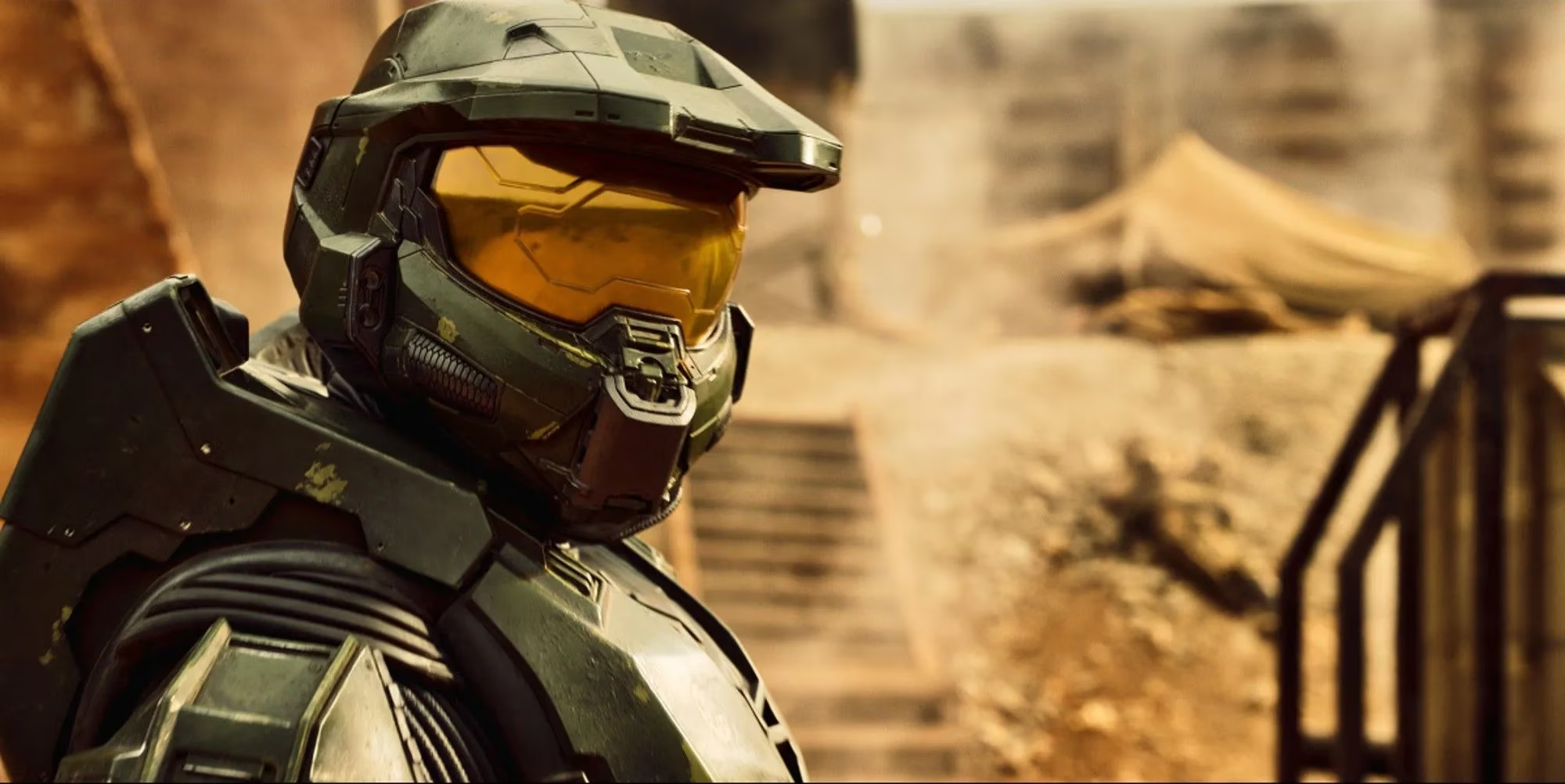
The Narrative Fallacy: Not All Games Are Created Equal for TV
The post-Last of Us frenzy created a dangerous illusion: that narrative-heavy games are automatic slam dunks for television. TV executives, eyes gleaming with dollar signs, saw a simple blueprint: take a story-driven game, remove the pesky "interactivity," and shoot a scene-for-scene remake. This worked for The Last of Us because its core is a deeply emotional character drama set against a zombie backdrop—it was already structured like premium TV. However, applying this logic universally is like trying to use a Gravity Hammer to fix a watch.
Let's examine the evidence:
-
The Last of Us: ✅ Perfect fit. Built on strong characters and moral dilemmas.
-
God of War: ❓ Risky proposition. Its Norse saga has heart, but a huge part of its power comes from the visceral, cathartic feeling of combat and the uninterrupted "one-shot" camera that immerses you in Kratos's journey. A TV show can't replicate that gameplay magic directly.
-
Halo: ❌ Major misfire. The story of any Halo game is arguably secondary to the sensory experience—the weight of the Assault Rifle, the "30 seconds of fun" loop of combat, the thrill of a well-designed battlefield. Ask someone to summarize Halo Infinite's plot and you'll likely get a long pause followed by, "Something about the Banished... and a pilot?" The narrative is a vehicle for gameplay, not the other way around.
Beyond the Obvious: The Potential in Unexpected Places
The adaptation gold rush shouldn't just target the big, cinematic AAA titles. The real creative victories might lie elsewhere. Imagine a Celeste TV series. You wouldn't try to film someone jumping between floating blocks for eight episodes. Instead, you'd translate the core experience—the exhausting, anxiety-ridden climb, the battle with one's own inner demons. You'd use the language of television: long, vertigo-inducing shots of crumbling handholds, the sound of pebbles falling into a bottomless abyss, and a haunting, personified manifestation of the protagonist's anxiety (Badeline) brought to life through intense drama and maybe some slick VFX. The show would be about the climb, not the platforming.
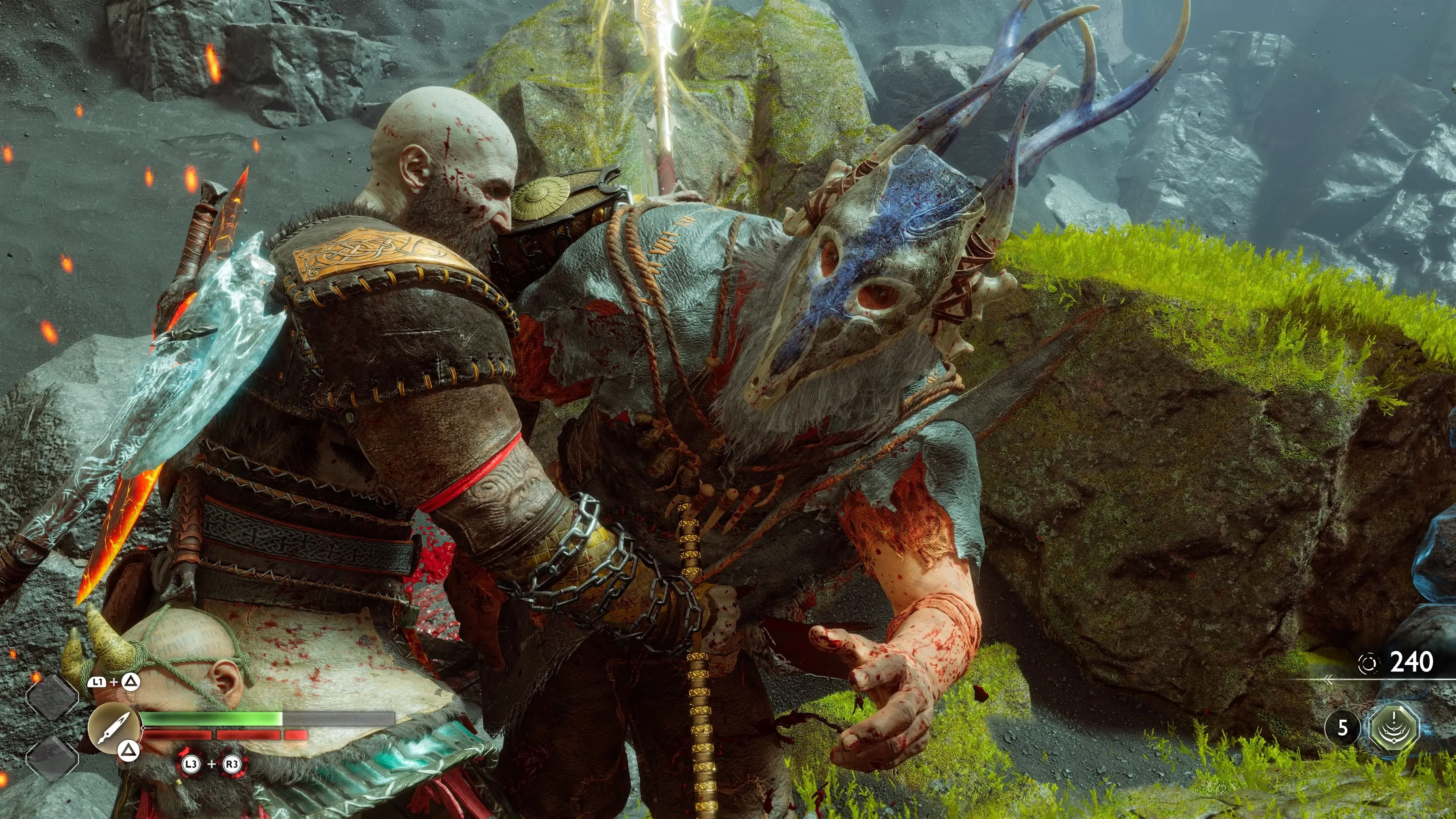
Where Halo Went Spectacularly Wrong: The FPS Fallacy
This is the epicenter of the Halo TV show's implosion. Its creators fell into the trap of thinking, "This is a first-person shooter, so our show must look like a first-person shooter." Cue the cringe-inducing cuts to Master Chief's helmet HUD view, a gimmick that felt dated when Doom (2005) did it once as a cheeky nod. Doing it repeatedly in the 2020s? It was like the show was shouting, "HEY, REMEMBER THIS IS FROM A VIDEO GAME?!"
War shows work. Band of Brothers works. Sharpe works. But none of them suddenly switch to a GoPro strapped to Sean Bean's head. The lesson is glaringly obvious: just because your source material is interactive doesn't mean your adaptation needs to mimic the interface of that interaction. A TV show about Halo should be about the universe, the politics of the UNSC and the Covenant, the mythos of the Forerunners, and the human (and super-soldier) cost of war—not a desperate attempt to make viewers feel like they're holding a controller.
A Better Path Forward: Reimagining, Not Replicating
The success of The Last of Us is an outlier, not a template. For most games, a 1:1 adaptation is a doomed mission. Halo needed a different treatment entirely. Instead of a gritty, ground-level war story (which feels absurd when your hero is a 7-foot-tall, near-invincible cyborg), what if it was framed as a grand sci-fi epic of exploration and mystery? Think Star Trek: The Next Generation meets Edge of Tomorrow. Master Chief and the UNSC Infinity discovering strange, ancient artifacts (the Halos) and dealing with first contact with alien civilizations. The focus shifts from replicating firefights to exploring the awe and terror of the unknown.
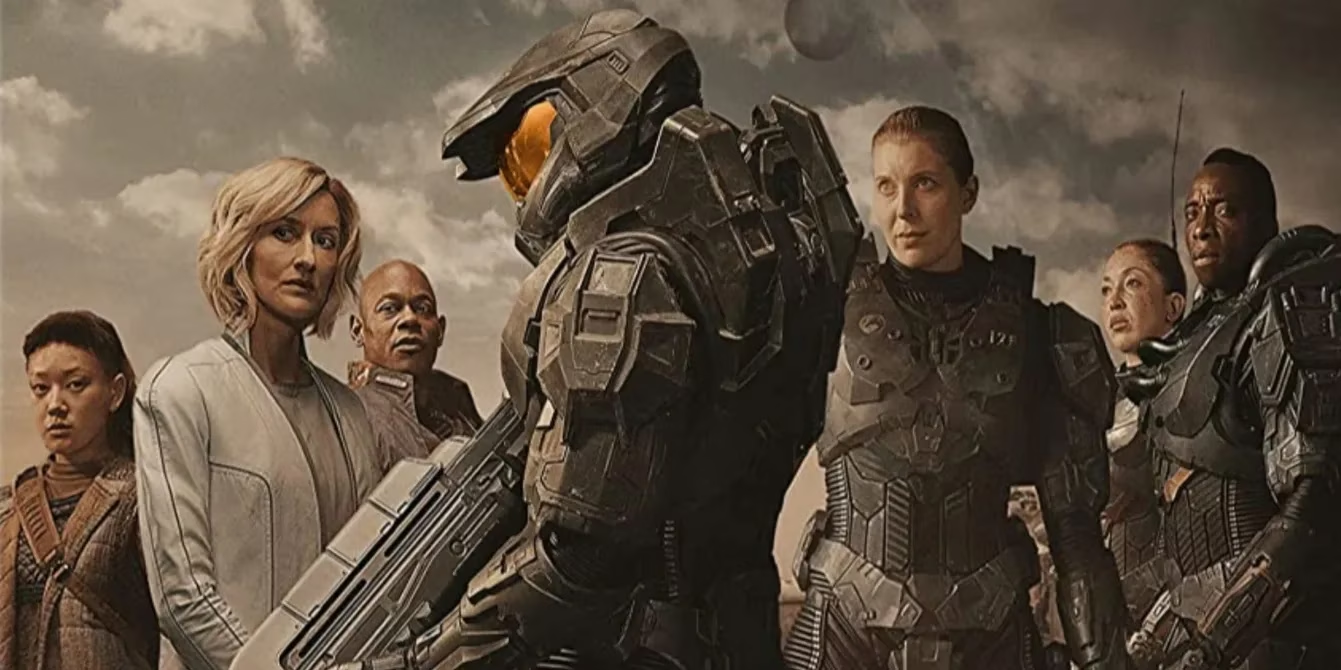
As for God of War, its hope lies not in recreating the Leviathan Axe's recall mechanics in live-action, but in leveraging its strong character dynamics—the strained, growing bond between Kratos and Atreus. A fresh story crafted for TV, perhaps exploring untold years or new realms, with the tone of a mythological epic like Vikings, could succeed where a direct translation would stumble.
In 2026, the mandate for game adaptations is clear: Stop asking if a game can be a show. Start asking how. The process requires translation, not transcription. It demands understanding the feeling a game evokes—be it isolation, triumph, anxiety, or wonder—and finding a new, native television language to express it. Otherwise, we're just doomed to more helmet-cam footage and confused audiences wondering where the fun went. 😬🎮➡️📺
As reported by PC Gamer, the most successful game-to-TV adaptations tend to translate the core feel of play—tone, stakes, and worldbuilding—rather than literal gameplay flourishes, which echoes why a HUD-heavy approach can make a series like Halo feel like generic sci-fi wearing a familiar helmet instead of a confident drama about war, politics, and discovery.