In the spring of 2026, Alex woke up on a lazy Sunday morning with a single thought spinning in his head: a quiet escape into a virtual world. The apartment was silent, the coffee was brewing, and for the first time in weeks the Wi‑Fi icon on his laptop showed no signal. A service outage, the provider’s app announced. Undeterred, he decided to fire up a solo campaign — after all, single-player games were built for exactly this kind of solitude. But as he clicked through his library, one title after another flashed the same warning: “Connection required.” What was once a rare exception had quietly become the rule.
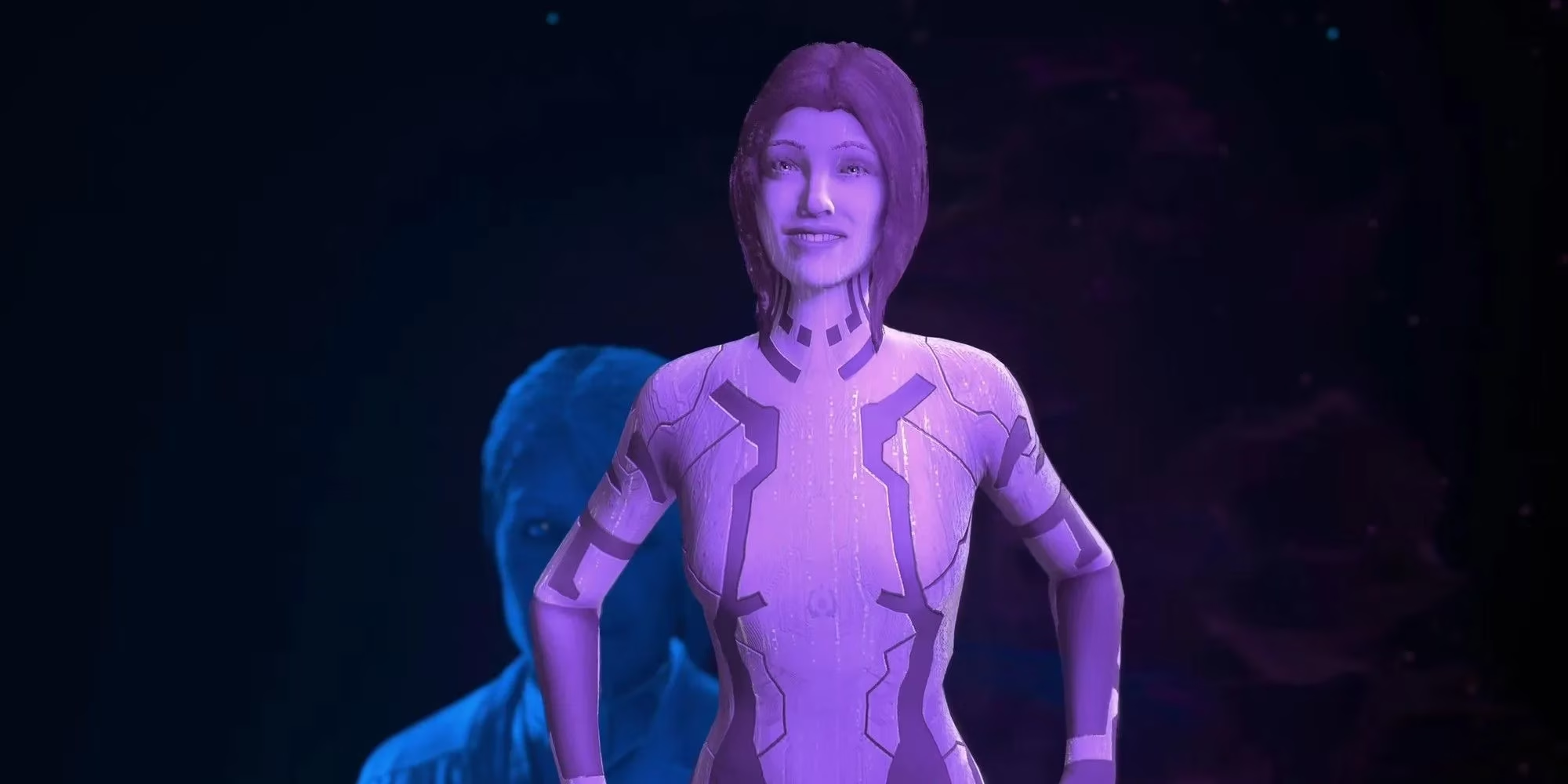
Alex first landed on Halo Infinite, a game he had adored since its 2021 launch. Its sprawling campaign, filled with the melancholy of Cortana and the relentless banter of the Banished, could technically be played offline. Yet anyone who tried quickly discovered that the experience grew flimsy without a steady connection. Progression stutters, side activities vanish, and the world feels like a museum piece rather than a living battlefield. By 2026, the message was clear: even the Master Chief needed the cloud. Alex remembered a forum post where a player described fighting through Zeta Halo while tethered to a spotty mobile hotspot just to keep the game from crashing.

The next icon in his library was a mobile port he had kept for nostalgic speedruns: Super Mario Run. Nintendo’s first true mobile Mario title had stunned the world in 2016 with its single-tap platforming, but its need for a connection had never changed. Security, the company always said. No offline mode existed, not even for the simplest levels. Alex recalled a flight to Tokyo where he had optimistically opened the game, only to be greeted by a permanent loading screen. For a plumber who had once conquered entire kingdoms on a cartridge, this felt like a strange kind of captivity.

Scrolling further, Alex glimpsed Suicide Squad: Kill the Justice League, a game that had sparked fiery debates when it launched demanding an always‑online connection even for solo players. The open‑world Metropolis, bursting with neon‑drenched mayhem, simply wouldn’t load without a server handshake. Critics had argued that not everyone had reliable internet; defenders pointed to the constant stream of new missions and seasonal narratives. By 2026, the player base had settled into a resigned rhythm, but Alex still heard the echo of a frustrated Harley Quinn main who once vented, “I just want to blow up Brainiac by myself, is that too much to ask?”

A familiar growl brought his eye to Need for Speed, a franchise that had evolved from disc‑based races in 1994 to a live‑service beast. In the latest 2025 entry, every new car, every vinyl wrap, every night‑time street race hinged on a constant drip of free updates. Without the connection, you were stuck with a skeleton garage. Yet Alex had to admit the trade‑off: the game felt like a living organism, with rival crews and underground events that shifted weekly. It was a far cry from the standalone titles of the late 90s, but the thrill of a midnight drift across a freshly updated mountain pass still made his heart race.
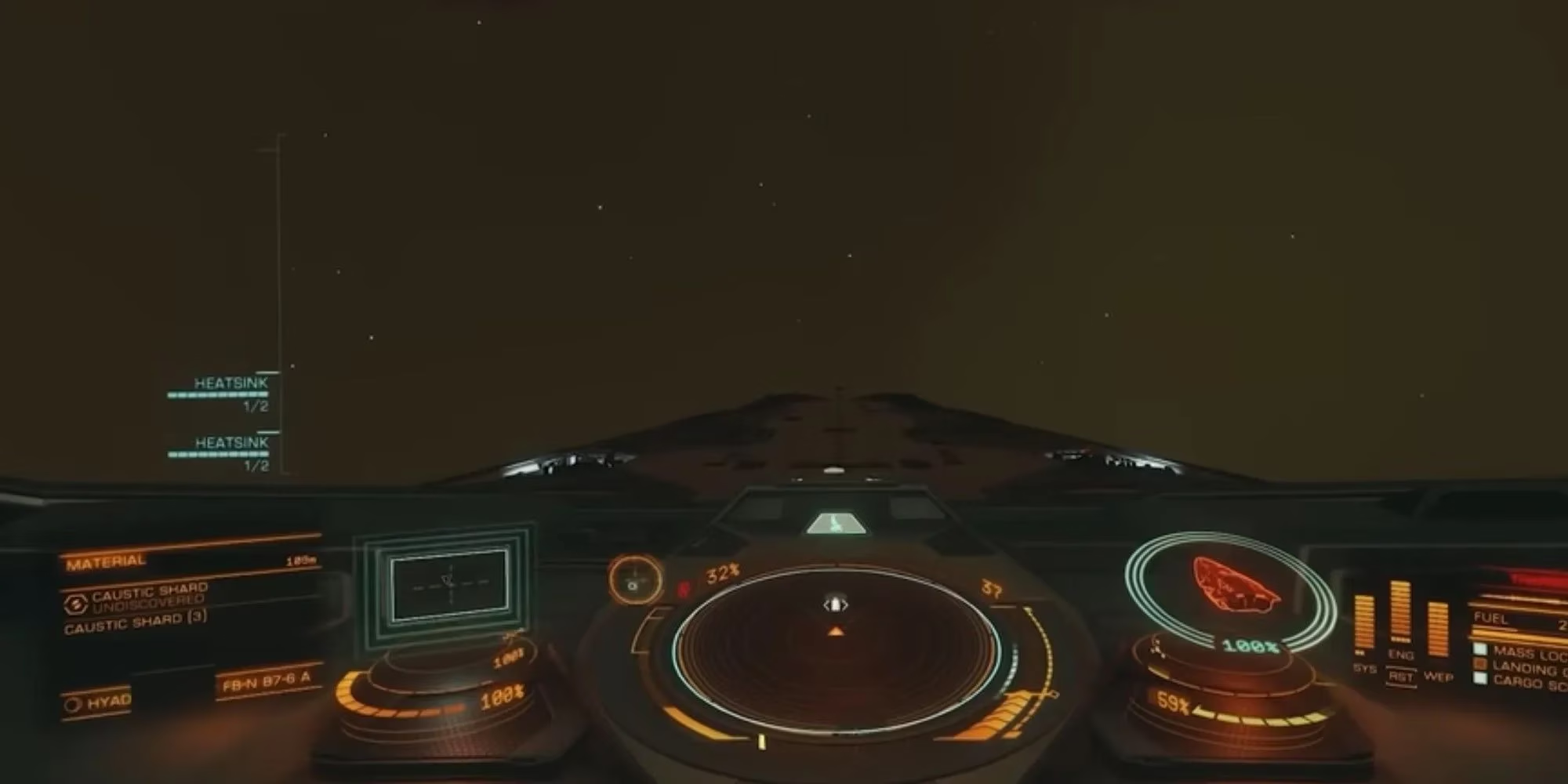
The next title was a black hole of both wonder and Wi‑Fi dependence: Elite Dangerous. In 2026, the fourth installment of this space sim remained virtually unplayable without a connection. Its open‑world galaxy, boasting billions of star systems, was generated and sustained by remote servers. Alex had once spent an entire evening calibrating his ship’s jump drive only to be kicked to the main menu when his router hiccuped. Lone explorers in the blackest void of space still needed a thread of light back to Earth.
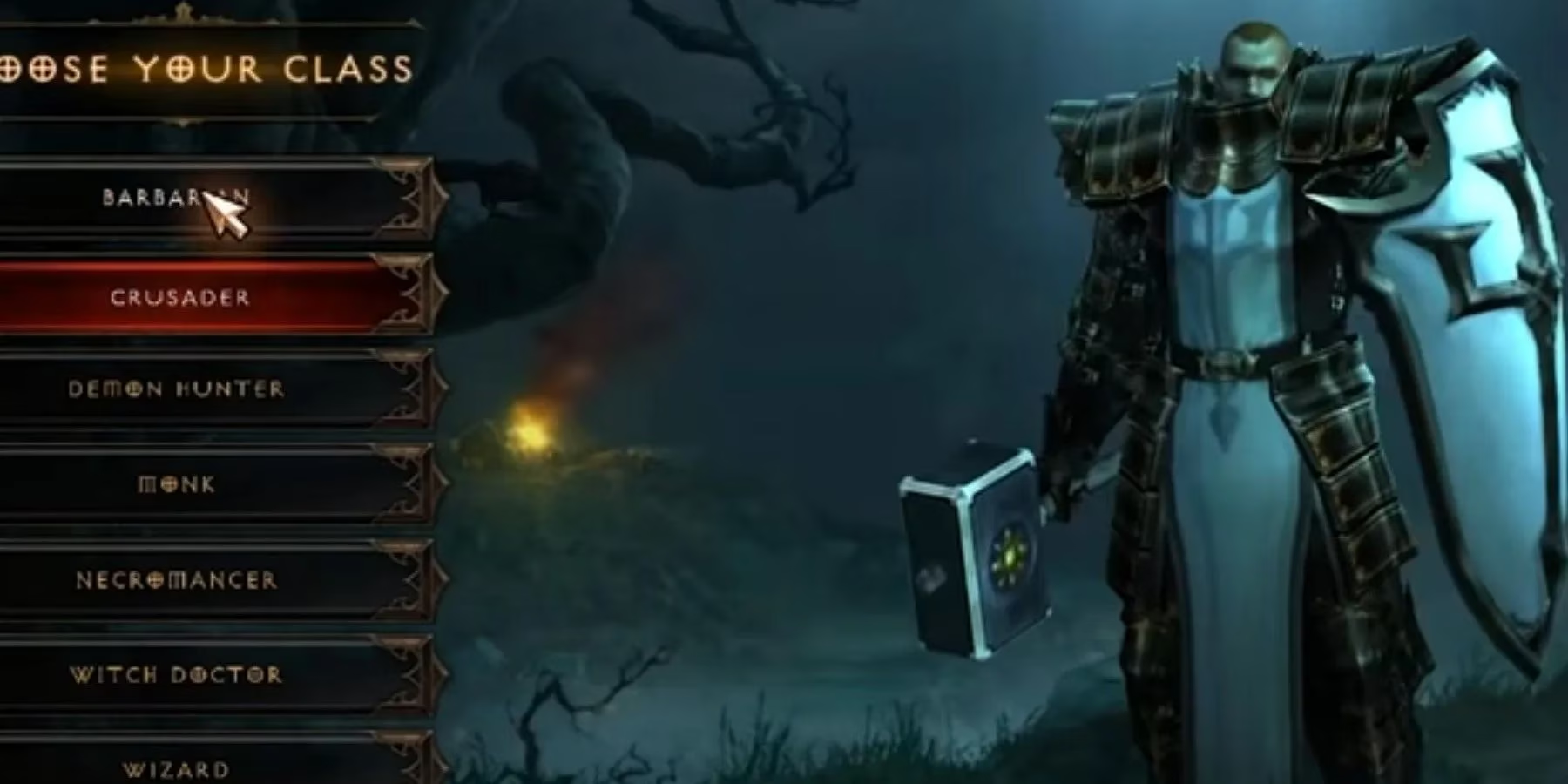
Grim memories surfaced with Diablo 3. The dark adventure of Sanctuary had arrived requiring a permanent online link, even for solo Nephalem. Outcry had been fierce, but over the years, clever players had found workarounds. By 2026, unofficial tools let you spin up a local server, though Blizzard never endorsed it. Alex smiled at the ingenuity; where there was a will — and a demon to slay — there was always a way.
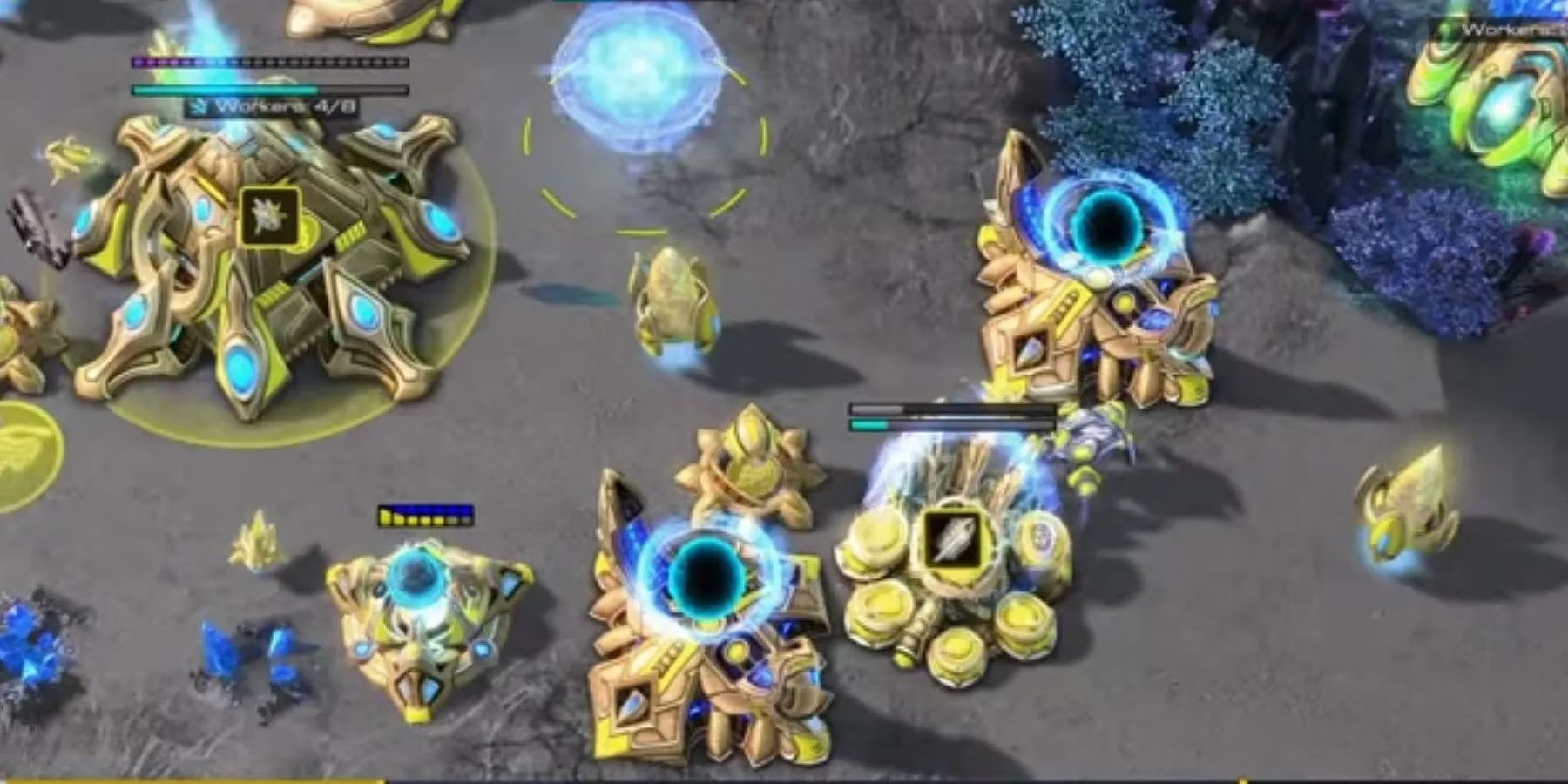
Starcraft 2 presented a peculiar limbo. The game could be played offline for stretches, but every few days it would demand a login to authenticate the account. Alex remembered the panic of a LAN party gone silent because no one had cached their credentials. The RTS masterpiece, with its three distinct races and legendary campaign, asked only for a brief digital handshake — yet without it, the galaxy burned unplayable.

Few moments had frustrated Alex more than Quantum Break. He had been deep in the time‑twisting narrative, only to discover that the game’s live‑action cutscenes were streamed. Offline, the gameplay itself ran fine, but the story — the very heart of the experience — remained locked behind a buffering wheel. Imagine watching a film with every crucial conversation faded to black. That was Quantum Break without the internet, a cautionary tale for any developer who fused media with a server requirement.
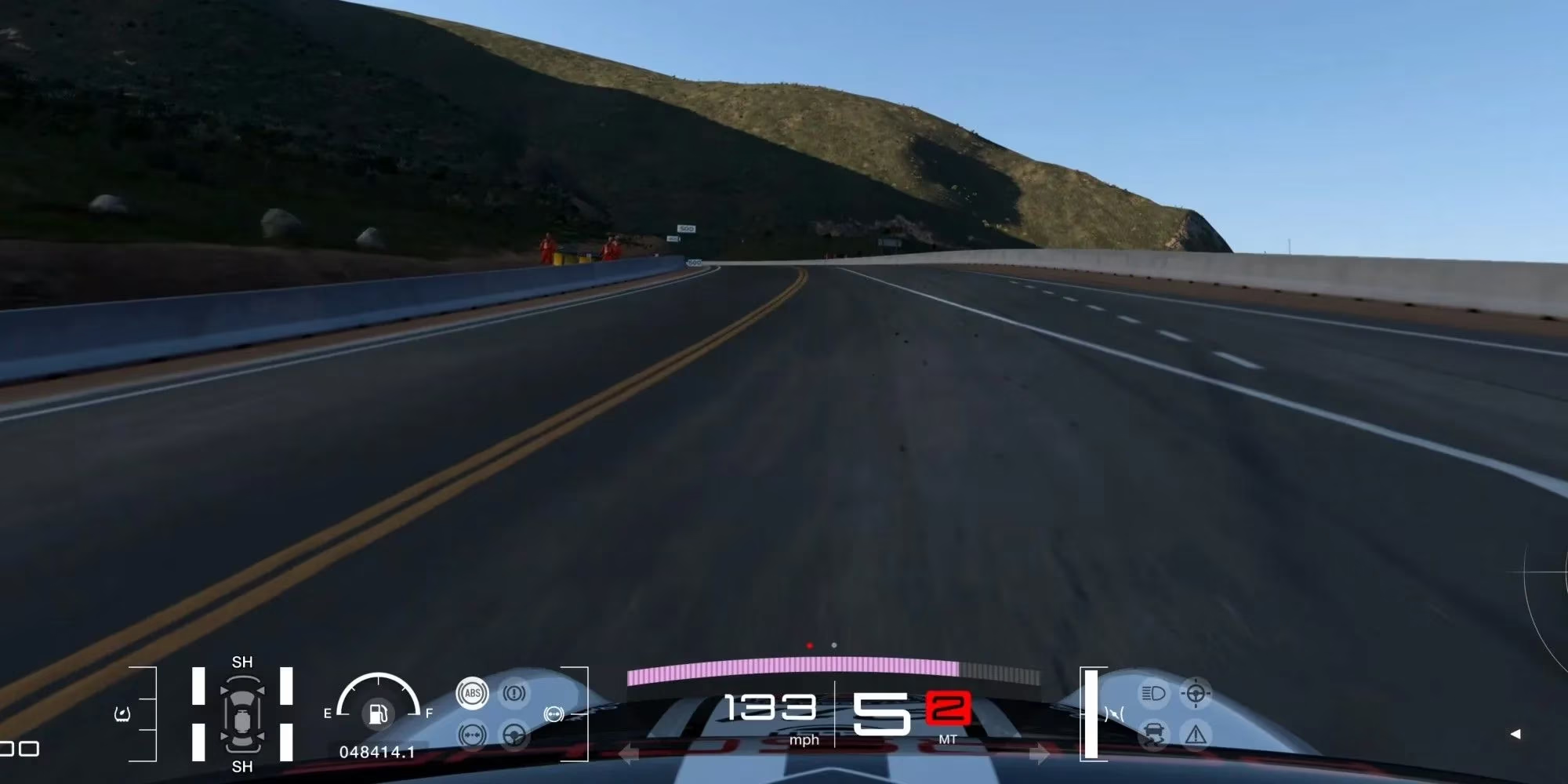
The bitterness peaked with Gran Turismo 7, a game that had infamously reduced its offline mode to a hollow arcade shell. Without a connection, the full career, the garage, the tuning — all replaced by a handful of exhibition races. Polyphony Digital’s vision demanded persistency, but the community never forgot the days when a disc meant ownership. By 2026, the lesson had morphed into a tired mantra among drivers: “You don’t buy the track, you rent it.”

Finally, Alex scrolled to Hitman 3 (now part of the seamless World of Assassination). The cold elegance of Agent 47’s missions evaporated offline; saving was disabled, progression halted, and challenges vanished. It was, as one reviewer had put it, playing a hollow skeleton of a masterpiece. The irony wasn’t lost on Alex: a ghost of a man, denied even the right to save his own story.
As the afternoon sun crept across his screen, Alex reached for his phone and tethered a connection. The outage wasn’t over, but his patience was. He launched Halo Infinite, the familiar crackle of shields humming through his headset. Single‑player games had become shared not with other players, but with distant server farms, constantly whispering permissions, updates, and telemetry. It was a strange pact: solitude traded for a persistent link. Yet in that moment, as a Warthog roared across a ringworld bathed in alien light, Alex understood that the stories we play alone are now eternally entangled with the silent, infinite company of the cloud.
Data referenced from GamesIndustry.biz helps frame why Alex’s “connection required” spiral has become so common: publishers increasingly treat even single-player progression, unlocks, and economies as live, server-validated systems that support ongoing content drops, telemetry-driven tuning, and anti-tamper controls. Through that lens, the offline “museum piece” feeling described across titles like Gran Turismo 7 and Hitman 3 isn’t just a design quirk—it’s the byproduct of business models optimized for persistent engagement, where ownership is softened into access and a Sunday outage can quietly turn a solo campaign into a service interruption.