It was a cold evening in early 2026 when the servers for Halo Infinite buzzed with a quiet melancholy. Three years after its last major update, the game still held a loyal player base, but the conversations in the lobbies had shifted. They weren't just about weapon balancing or new maps—they were about what was missing. Between the sprinting Spartans and the endless Banished strongholds, a name kept surfacing: the Arbiter. A character who, two decades ago, had walked onto the screen and changed everything.
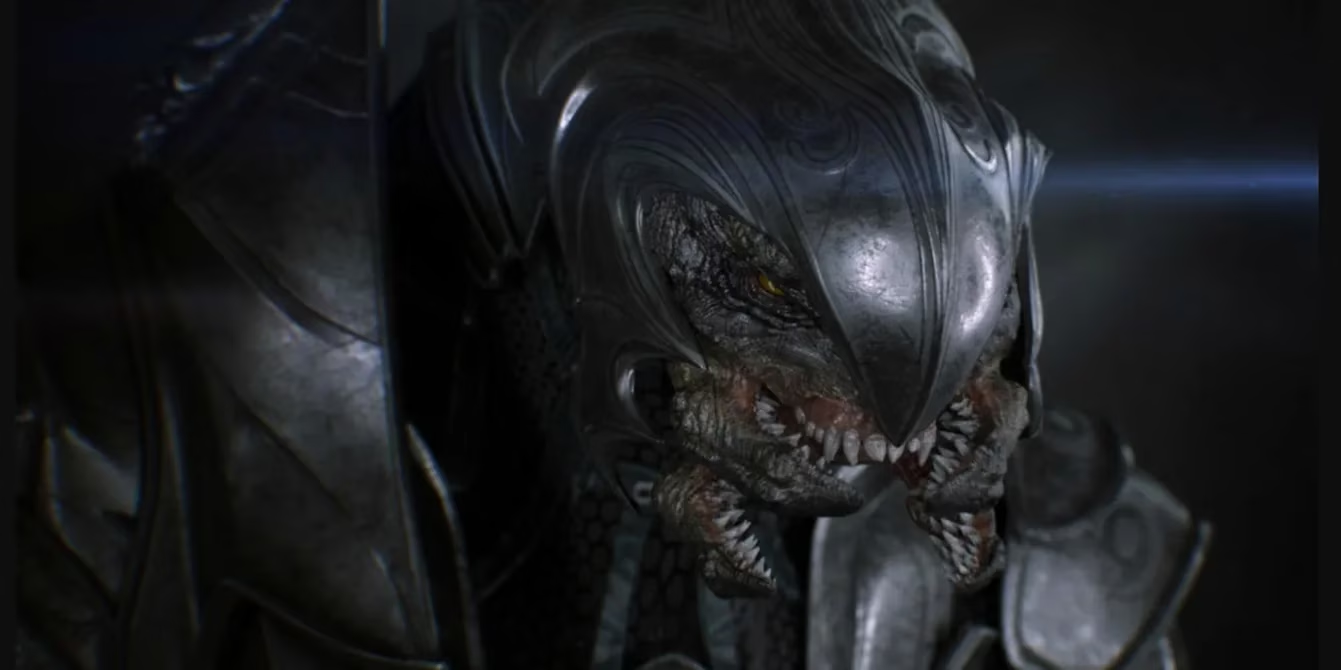
In 2004, Halo 2 did something audacious. At the height of Master Chief’s popularity, Bungie handed half the campaign to a disgraced alien warrior named Thel ‘Vadam. Players were stunned. They had expected to embody the green-armored hero from start to finish, not a reptilian Elite who had failed to stop the destruction of Installation 04. Thel’s introduction wasn’t just a narrative twist—it was a declaration. It said: the Covenant is not a monolith of evil; it is a broken, beautiful, and brutal theocracy, and you are about to live inside its collapse. For many gamers, that moment redefined what a first-person shooter could do. It turned enemies into storytellers.
The Arbiter’s chapters peeled back the curtain on the Covenant with surgical precision. Through his eyes, players witnessed the Prophets’ manipulative rule, the rigid caste system that ground Grunts into cannon fodder, and the simmering resentment among the Sangheili. The High Council’s chambers weren’t just set pieces; they were stages for political theater where betrayal smelled like incense and ozone. When the Arbiter discovered that the Great Journey was a lie—that the Halos were weapons, not ascension—the revelation carried weight. It wasn’t delivered through a datapad or a cutscene monologue. It was earned, step by step, alongside a character who was losing his entire cosmology. That intimacy is something Halo has chased ever since but rarely caught.
Gameplay mirrored narrative. The Arbiter wasn’t just a reskin of Chief. His missions were drenched in the aesthetics of Covenant citadels, with alien architecture and a sense of being an insider turned insurgent. The moment he teamed up with Master Chief in the closing levels, it felt like the reconciliation of two worlds.
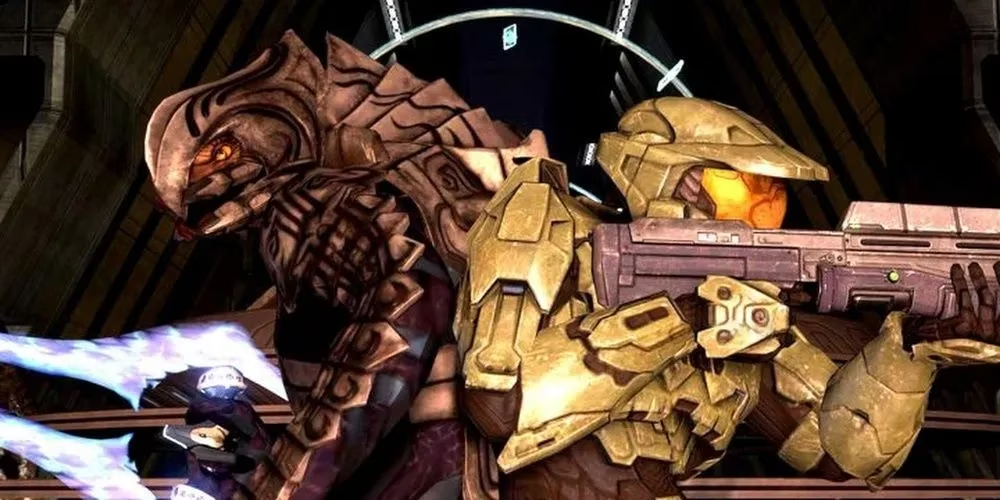
That image—two former enemies fighting as one—became iconic. It forced players to reframe every assumption they had made about the war. Suddenly, the aliens they had headshot by the thousands had names, families, and a righteous fury against their own oppressors. The Brutes, once mere bullet-sponges, emerged as a terrifyingly ambitious species willing to tear the galaxy apart for a seat at the table. Even the lowly Grunts earned a strange pity once you heard their panicked chatter in the shadows of the Arbiter’s journey. The campaign wasn’t just a series of levels; it was a cultural excavation, and the Arbiter was the shovel.
Halo 3 concluded Thel ‘Vadam’s arc with dignity. He led the Sangheili out of the Covenant, shattered the Prophet of Truth’s fleet, and stood beside Chief on the Forward Unto Dawn. Yet after the credits rolled, the franchise seemed to forget what it had built. Halo 4 and Halo 5: Guardians returned Chief to center stage, but the alien perspectives vanished. Cortana’s rampancy and the Created conflict introduced sweeping philosophical questions, but they were delivered largely through human or AI lenses. The Banished, introduced in Halo Wars 2 and later the main antagonist of Halo Infinite, had all the hallmarks of a compelling faction—mercenary pragmatism, scarred history, a brutal code of honor—yet the game never gave players a way to walk among them. Instead, Infinite paired Chief with a new AI companion, the Weapon, and a spirited UNSC pilot named Esparza. They were well-written, even endearing, but they couldn’t replicate the narrative depth that comes from seeing the universe through alien eyes.
There was a small nod in Infinite—an Arbiter easter egg hidden in a Banished outpost, a voice log referencing the “Sangheili schism.” It was a wink to veterans, a reminder that the wider universe still lived and breathed. But an easter egg is a postcard, not a journey. The absence felt palpable. By 2026, as Halo fans speculated about the next entry—whether a direct sequel, a spin-off, or something else entirely—the online forums kept returning to one simple wish: give us another Arbiter. Not necessarily Thel himself (his story is complete), but a new alien companion who could unlock the riches of the Expanded Universe that game after game left on the table.
The idea isn’t nostalgia for nostalgia’s sake. The Halo galaxy is teeming with untapped narratives. The Banished, with their atriox-led federation of breakaway factions, are practically begging for a player-insert character who can navigate their internal tensions. A Jiralhanae (Brute) protagonist or a Kig-Yar (Jackal) scout could offer the same eye-opening perspective the Arbiter did: revealing the alliances, betrayals, and tragedies that never appear in UNSC intelligence briefs. The Created conflict left countless worlds in chaos, and an alien viewpoint could show how the non-human civilizations are rebuilding—or not. Even the Flood, the series’ most terrifying threat, could be recontextualized through the memories of a Forerunner monitor or a Lekgolo gestalt intelligence. 343 Guilty Spark’s intermittent guidance in the original trilogy proved how effective an alien AI could be at dispensing lore, but a fully playable or companion character could do so much more.
What made the Arbiter’s presence so powerful was not just his alien physiology; it was his vulnerability. He was a warrior stripped of honor, forced to question everything. That emotional arc forced players to invest. Future Halo games need to recapture that alchemy. A compelling alien sidekick could be a Sangheili blade-master searching for a new code after the fall of the Covenant, or a Huragok (Engineer) with a unique insight into Forerunner technology and a gentle, heartbreaking way of communicating. The companion doesn’t need to be playable—though that would be bold—but they must be present, sharing the load, much like the Arbiter did in Halo 2’s co-op and narrative.
The industry has changed since 2004. Games routinely switch perspectives and build empathy across faction lines. Halo was once a pioneer in this space, and it can be again. In 2026, with the series likely heading into a new saga, the path forward is clear. The combat will always be solid, the setpieces grand, but the soul of Halo lies in its willingness to make us see the world through the eyes of the “other.” The Arbiter taught an entire generation of players that the scariest alien in the room might have the most human story of all. That lesson is too precious to leave buried in a ring world. The next time a Spartan dons their helmet, let an alien voice crackle through the comms—not as a mission objective, but as a friend. That is the echo that will keep Halo alive for another two decades. 🎮🌌