For many gamers, the dream of creating their own video game can feel like a distant fantasy. Learning a complex game engine or diving into coding from scratch presents a significant barrier. But what if the tools to build incredible experiences were already in their hands? Over the years, several popular titles have equipped their players with powerful creative suites, transforming players into creators. This has led to a fascinating phenomenon: entirely new, and often astonishing, games being born within the framework of existing ones. From racing games in first-person shooters to horror adventures in social platforms, the creativity of the gaming community knows no bounds. Let's explore some of the most remarkable examples of games that were built using other games as their foundation.
🏎️ Mario Kart in Halo Infinite
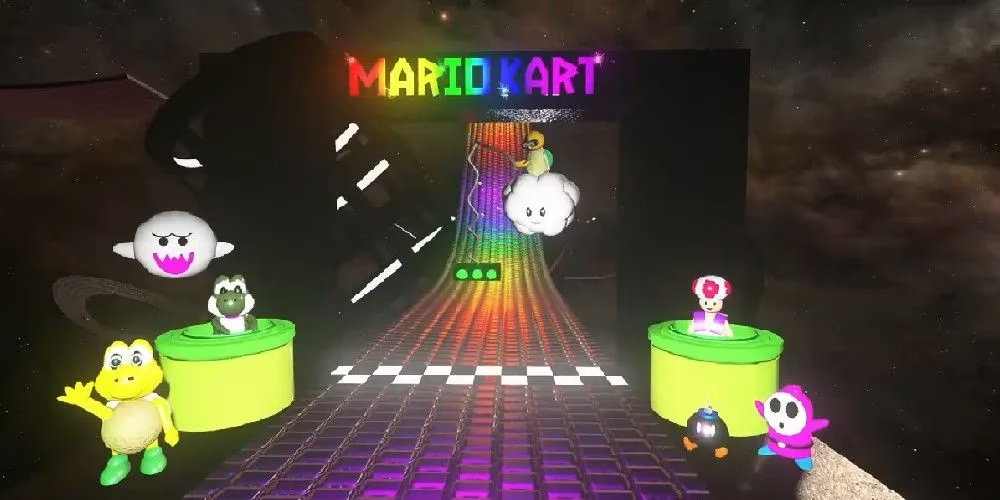
Who would have thought the iconic, colorful chaos of Mario Kart could find a home in the sci-fi military universe of Halo? While Halo Infinite had a mixed launch, its robust Forge mode—a map and game type editor—has fostered a dedicated creative community. YouTubers Its L0L0 and The MagicalSock1 leveraged these tools to create a faithful and vibrant recreation of a classic Mario Kart track. Players race around on Mongoose vehicles, navigating all the expected jumps, sharp twists, and even loop-de-loops. Isn't it remarkable how a game about super-soldiers can transform into a whimsical kart racer?
🏴☠️ Pirate Adventures in Fortnite
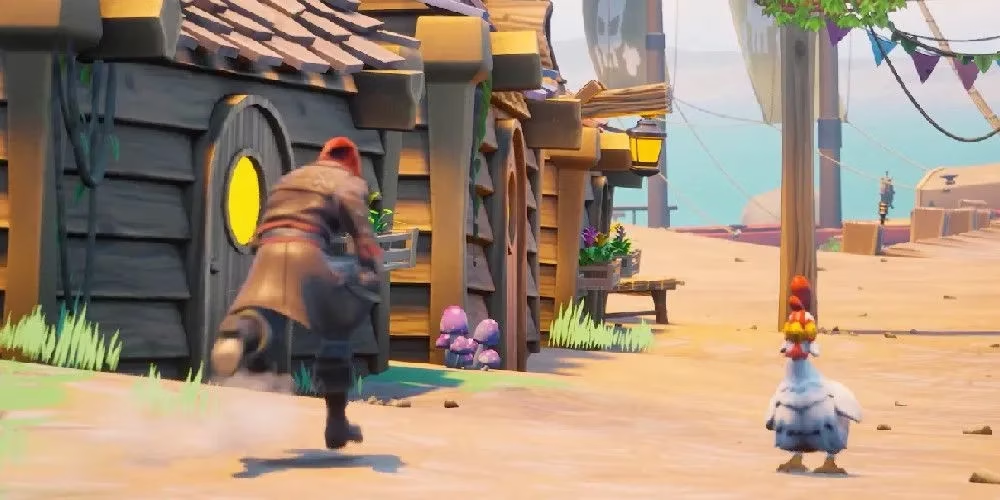
Fortnite's Battle Royale mode revolutionized online gaming, but its evolution didn't stop there. The introduction of Unreal Editor for Fortnite (UEFN) opened the floodgates for player creativity, moving far beyond the standard last-player-standing formula. Creator 3D Lab crafted Pirate Adventure, a nautical exploration game set within Fortnite. Players search for treasure, craft tools, and sail between islands on a detailed map. The art style charmingly echoes classic point-and-click adventures like Monkey Island, and the surreal sight of characters like Master Chief serving drinks to pirate skeletons adds a layer of hilarious charm. It begs the question: what can't you do in Fortnite these days?
👻 Horror in Roblox with Doors
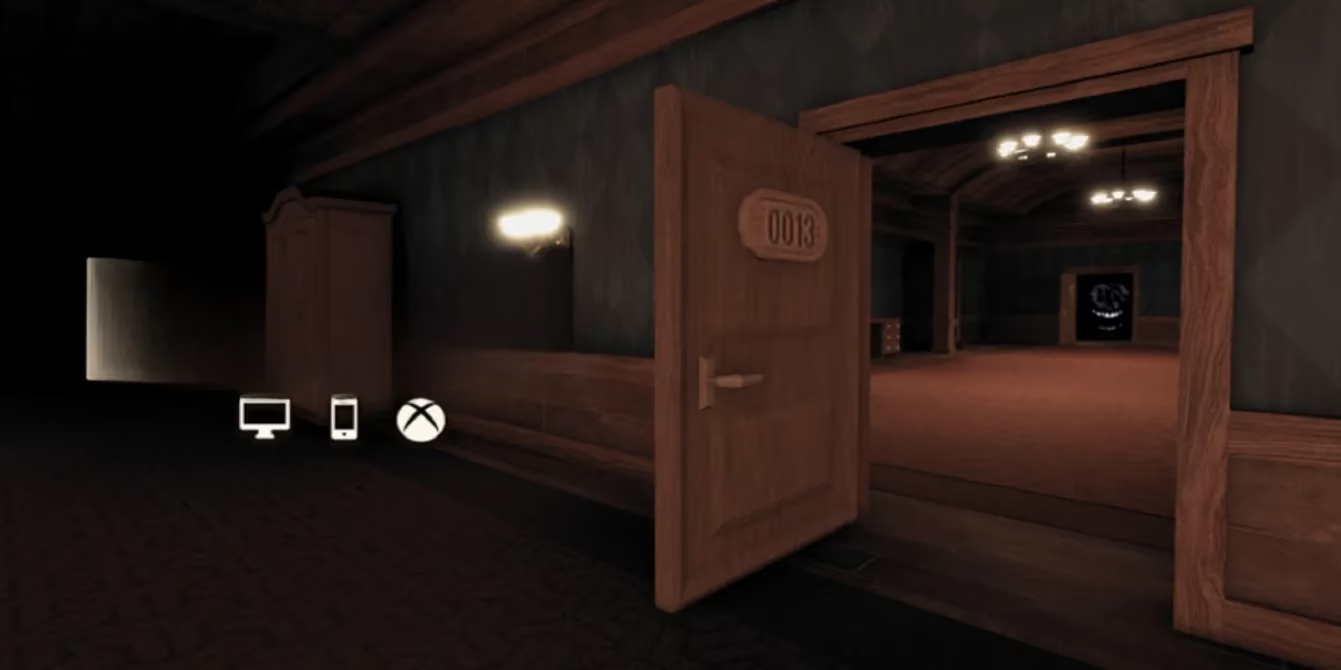
Roblox is often seen as a playground for younger audiences, but its powerful development tools allow for experiences of any genre. Doors, created by Lightning_Splash and co-developed by RediblesQW, is a prime example of a fully-fledged horror game built on the platform. Inspired by titles like Spooky's Jump Scare Mansion, players navigate a series of terrifying rooms filled with unique monsters. The cast includes a tentacled creature seeking "college money," a mischievous goblin named El Goblino, and a skeleton simply called Bob. This demonstrates how Roblox's accessible toolkit can be used to craft genuinely tense and atmospheric experiences.
🟡 Classic Arcade in Minecraft
Is there anything that hasn't been built in Minecraft? The game's simple blocks and complex redstone circuitry have become a universal creative medium. Creator Dominexis took on the challenge of recreating the arcade classic Pac-Man entirely within vanilla Minecraft, without any mods. This impressive build allows players to step into the roles of Pac-Man or the ghosts, with support for multiplayer. The creator faithfully replicated the visuals, gameplay, and even the sounds, proving that with enough ingenuity, Minecraft can become a portal to gaming's past.

🏛️ Roman Strategy in LittleBigPlanet
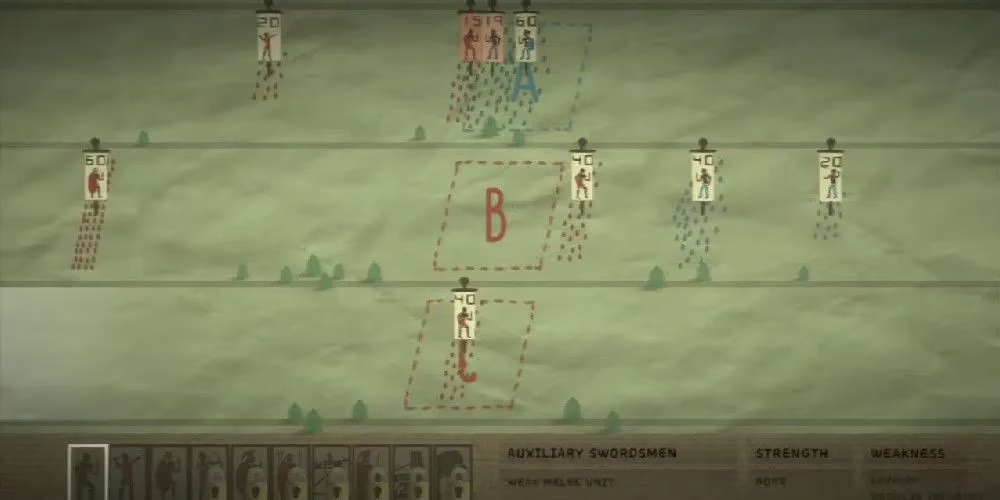
The LittleBigPlanet series is synonymous with cute Sackpeople and craft-based platforming. So, a deep historical strategy game set during the rise of the Roman Empire might be the last thing you'd expect to find there. Yet, creator Shaggy40000 made it a reality with Rise of Rome. This creation ditches the platforming entirely for a map of ancient Europe, where players conquer territories using period-accurate military units. It features progression, unlocks, and even a save system, showcasing the incredible versatility of LittleBigPlanet's creation tools.
🕵️♂️ Prop Hunt from Garry's Mod
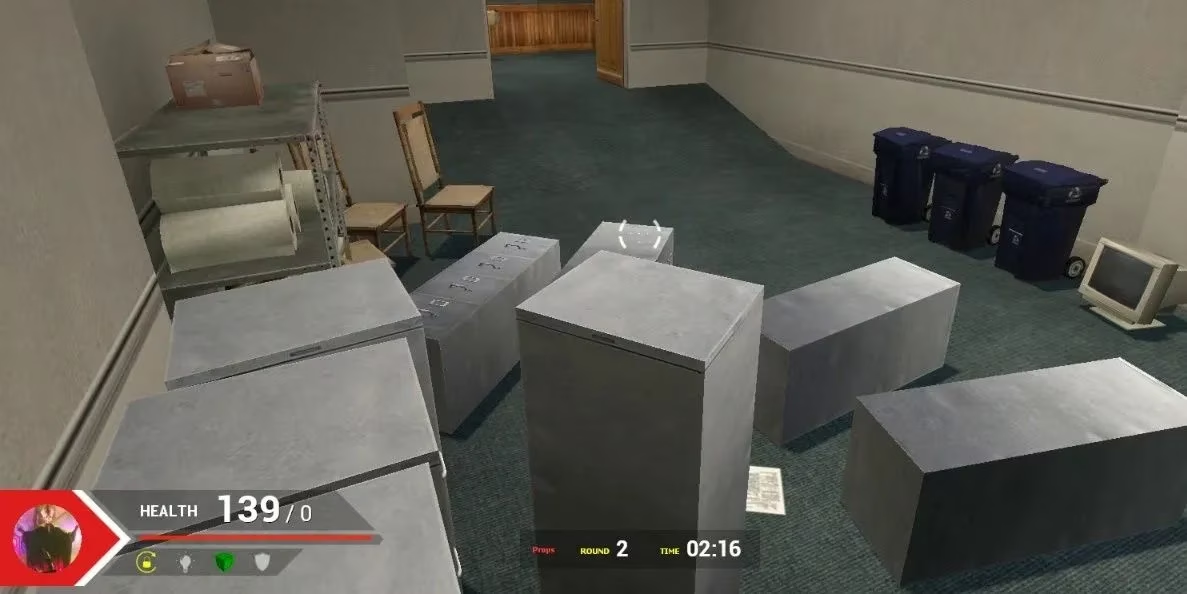
Garry's Mod started as a physics sandbox for the Half-Life 2 engine but became a breeding ground for entirely new game modes. The most famous of these is undoubtedly Prop Hunt. This hilarious multiplayer game splits players into hunters and hiders, where the hiders can disguise themselves as any object in the environment. Its simple, chaotic premise led to massive popularity, countless community maps, and became a staple for YouTube content creators. It's a perfect example of a community invention that defined a genre of its own.
🌊 An Avatar Game in Dreams
When the official Avatar: The Last Airbender game, Quest for Balance, disappointed fans in 2023, the community took matters into their own hands. Within Dreams—a PlayStation-exclusive game-creation suite—developer Elca Games has been working for nearly five years on Four Seasons. This ambitious project aims to deliver the open-world Avatar experience fans have craved. The current demo lets players explore an island as Aang, using his glider and abilities. The project's progress has even earned praise from the original voice actors, proving that sometimes the best tribute comes not from studios, but from passionate fans with the right tools.

🍄 A Full Mario Game in Super Mario Maker 2
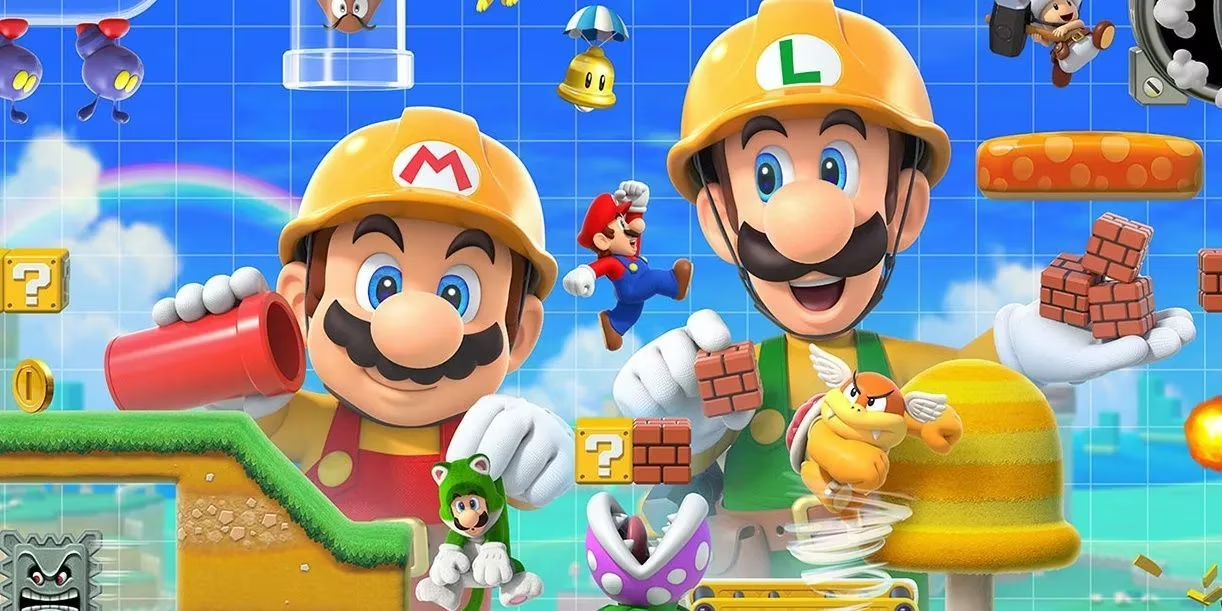
Super Mario Maker 2 didn't just let players design levels; it empowered them to create entire games. YouTuber RubberNinja (Ross O'Donovan) took this to its logical extreme with Super RubberRoss World. This is not a collection of random levels but a cohesive, brutally challenging full-game experience complete with an overworld map. The levels are infamous for their devilish design, requiring pixel-perfect precision and clever problem-solving. They have become legendary for frustrating—and entertaining—both players and fellow YouTubers like the Game Grumps. It stands as a testament to how deep the creative well can go when developers truly trust their community.
These examples represent just a fraction of what's possible. As of 2026, game creation tools are only becoming more powerful and accessible. They democratize game development, turning players into architects of their own worlds. The next time you boot up a game with a level editor or creative mode, remember: you're not just playing a game, you're holding a toolbox. What incredible experience will you build inside it?