In 2026, the story of Halo is no longer just about a Spartan, a ring, or a war. It is a story about a studio that had to admit its favorite tool was breaking its back. 343 Industries, now known as Halo Studios, once built its games on Slipspace, a custom engine that powered Halo 4, Halo 5: Guardians, and Halo Infinite. But the engine, for all its ambition, became a stubborn beast. It groaned under the weight of modern production, and when the lead engineer of Slipspace left the studio, the beast lost its keeper. Reports from VGC and other outlets suggested that 343 was debating a move to Unreal Engine. By 2024, that debate ended. By 2026, the transition is no longer a rumor. It is the new foundation of Halo's future.
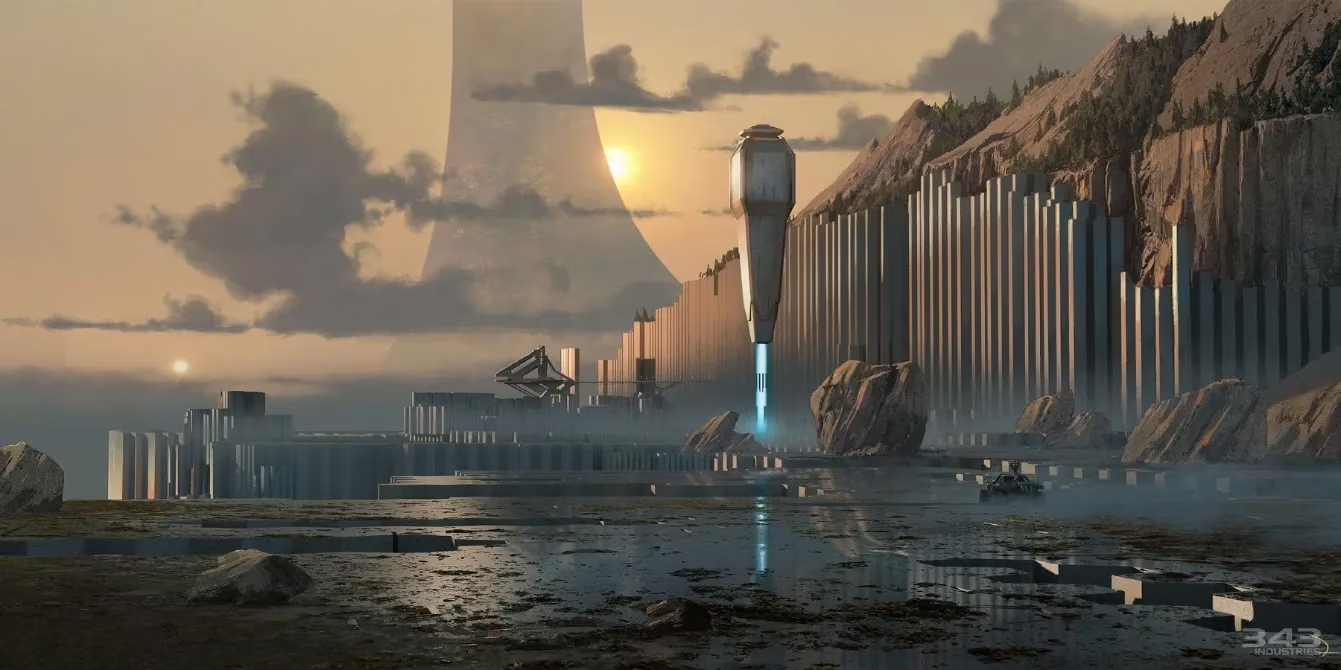
Let's be real: Halo Infinite's launch was rough. The game had been delayed for a year, and yet Forge and co-op campaign were still missing when it arrived. Players who had waited patiently found a multiplayer mode with promise but a content pipeline that felt like a trickle. Fans grew frustrated. Some called for Microsoft to replace 343 as Halo's developer. The studio also faced internal restructuring, and its head departed. Slipspace, once the pride of the team, started to look less like a superpower and more like a ball and chain. It required specialized knowledge, long training, and constant maintenance. When developers left, that knowledge walked out the door with them. The engine did not just need upgrades; it needed a rescue team.
That is why Unreal Engine became so attractive. Unreal Engine 5 offers tools like Nanite and Lumen, a massive talent pool, and a workflow that many developers already understand. For Halo Studios, adopting Unreal could reduce costs, speed up production, and free the team to focus on what matters: story, gameplay, and the unmistakable feel of Halo. Instead of fighting their own engine, developers could fight for better content. The hope is that future Halo titles will arrive faster, look stunning, and avoid the painful droughts that defined Halo Infinite's early years.
But switching engines is not a magic spell. It is a long, expensive, and humbling process. Teams must relearn old habits, rebuild tools, and rethink pipelines. Halo Infinite itself remains on Slipspace, which means its ongoing updates and legacy content are tied to the old machine. The game has received new modes, events, and co-op achievements, yet it still lacks maps, weapons, and classic Halo features that fans crave. That's a tough pill to swallow for a franchise that once set the standard for first-person shooters. The next Halo project, built in Unreal Engine 5, will need to restore faith. It will need to prove that the engine change was not just a technical decision, but a creative rebirth.
In 2026, Halo Studios is reportedly working on multiple projects using Unreal Engine 5. The advanced tools could be perfectly positioned to create future and more successful Halo titles. Yet for many players, the solution does not matter. They do not care whether the code is written in Slipspace or Unreal. They care whether the game works, whether it is fun, and whether it respects their time. Halo Infinite is available now on PC, Xbox One, and Xbox Series X/S, but its legacy is still being written. The studio can talk about engines, workflows, and restructuring all it wants. At the end of the day, the only thing that will win fans back is a reliable source of content and a Halo game that feels alive.
The story of Slipspace is a cautionary tale. A custom engine can be a powerful advantage, but it can also become a prison. It can carry a studio to greatness, then demand more than the studio can give. Unreal Engine 5 is not a guarantee of success, but it is a fresh canvas. Halo Studios now has the chance to paint something worthy of the franchise's legacy. The ring is still out there. The Chief is still waiting. And in 2026, the question is no longer which engine will power Halo. The question is whether the studio can finally deliver the content that players have been begging for.