When Halo Infinite arrived, the absence of Forge was one of the most visible gaps in its multiplayer offering. The mode had become a series staple since Halo 3 in 2007, and its delay fed a broader narrative of inconsistent updates, missing features, and frustrated fans. The co-op beta drew a lukewarm response, and every new delay made the eventual Forge release feel less like a bonus and more like a rescue mission. By 2026, that rescue mission has become a long-term relationship: Forge is no longer a rumor or an upcoming beta but a central part of how Halo Infinite sustains itself.
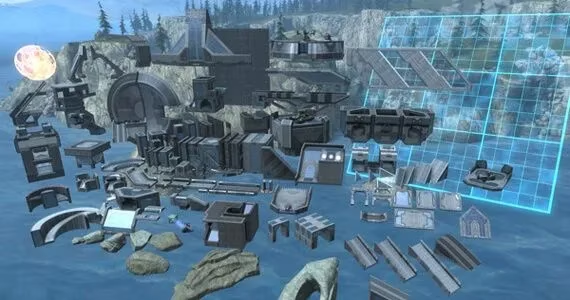
Forge's value lies in permission. It gives players the tools to alter existing maps, move weapons and vehicles, build new architecture, and script custom rules. The reference period's most famous example remains Grifball, the rugby-inspired mode popularized by Rooster Teeth and rebuilt by fans with Gravity Hammers, an oversized ball, and custom maps. That example still explains why Forge matters: it turns players from consumers into designers.
From Delay to Daily Driver
Halo Studios, formerly 343 Industries, no longer has to sell Forge as a promise. The mode's public beta began in late 2022 and expanded over subsequent seasons, and by 2026 the community can point to a broad library of custom modes and maps rather than a single hypothetical feature. The question is less whether Forge can save Halo Infinite and more whether the game's systems can keep surfacing the best community work.
| Forge era | What it added or proved |
|---|---|
| Halo 3 (2007) | Map editing, custom rules, and the rise of Grifball |
| Halo 5 (2015) | A post-launch free update model for Forge |
| Halo Infinite (2022 beta onward) | Scripting, object budgets, and deeper community creation |
The earlier warning that Forge would have to release without a hitch remains useful in 2026, even though the mode is established. A delayed tool can be forgiven. A tool that is hard to discover, hard to share, or hard to play with friends is a persistent problem. Halo Infinite's expansive traversal systems and equipment sandbox remain ripe for creativity, but creativity needs curation. Players must be able to find modes, understand rules, and join sessions without leaving the game's ecosystem.
The Community Is the Content Engine
The Halo community has repeatedly proven that it can make unique maps and modes when given proper tools. Forge gives players freedom to remix pre-existing maps for a particular play style or to build entirely new arenas. That freedom is not a side attraction. It is a content engine that can extend the life of a multiplayer game long after the launch window has closed.
-
🛠️ Map remixes that reshape familiar spaces for new modes
-
🎮 Custom game rules that turn Halo into a sport, a puzzle, or a party game
-
🧪 Scripting experiments that test the sandbox in unexpected ways
-
🌐 Community curation that helps casual players find the best creations
The stakes are different now. In the reference period, Forge was framed as a potential saving grace for a multiplayer mode fighting an uphill battle. In 2026, it is better understood as a maintenance system for player investment. Halo Infinite is available on PC, Xbox One, and Xbox Series X/S, and its long-term health depends on giving players reasons to return. Forge does that by turning every ambitious player into a potential map designer, mode designer, and community organizer.
That does not mean Forge is a cure-all. A creative mode cannot fix every complaint about cosmetics, progression, or update cadence. It can, however, keep a multiplayer game alive by placing new content in the hands of the people who care most about it. The most important lesson is not that Forge can generate content. It is that Forge can generate ownership. When players build a map or mode and share it, they become stakeholders in the game's future.
By 2026, Halo Infinite's Forge story is no longer about whether the mode will arrive. It is about whether the ecosystem around it can keep pace with the community's ambition. The mode has moved from delayed promise to community lifeline, and its next challenge is to remain visible, playable, and worth building for.