For over two decades, the first-person shooter landscape has been defined by a legendary rivalry. On one side, the sci-fi epic of Halo, the flagship franchise that helped build Xbox. On the other, the relentless military juggernaut of Call of Duty. These titans have battled for players' attention, each carving out its own distinct lane in gaming history. But as we look toward 2026, the winds of change are blowing stronger than ever. The seismic shift isn't coming from a new game engine or a revolutionary mechanic—it's coming from the boardroom. Microsoft's landmark acquisition of Activision Blizzard has fundamentally redrawn the map, turning these historic competitors into corporate siblings. What does this mean for the future of these iconic series? Get ready, because the age of competition might just be giving way to an era of unprecedented collaboration. 😮🎮
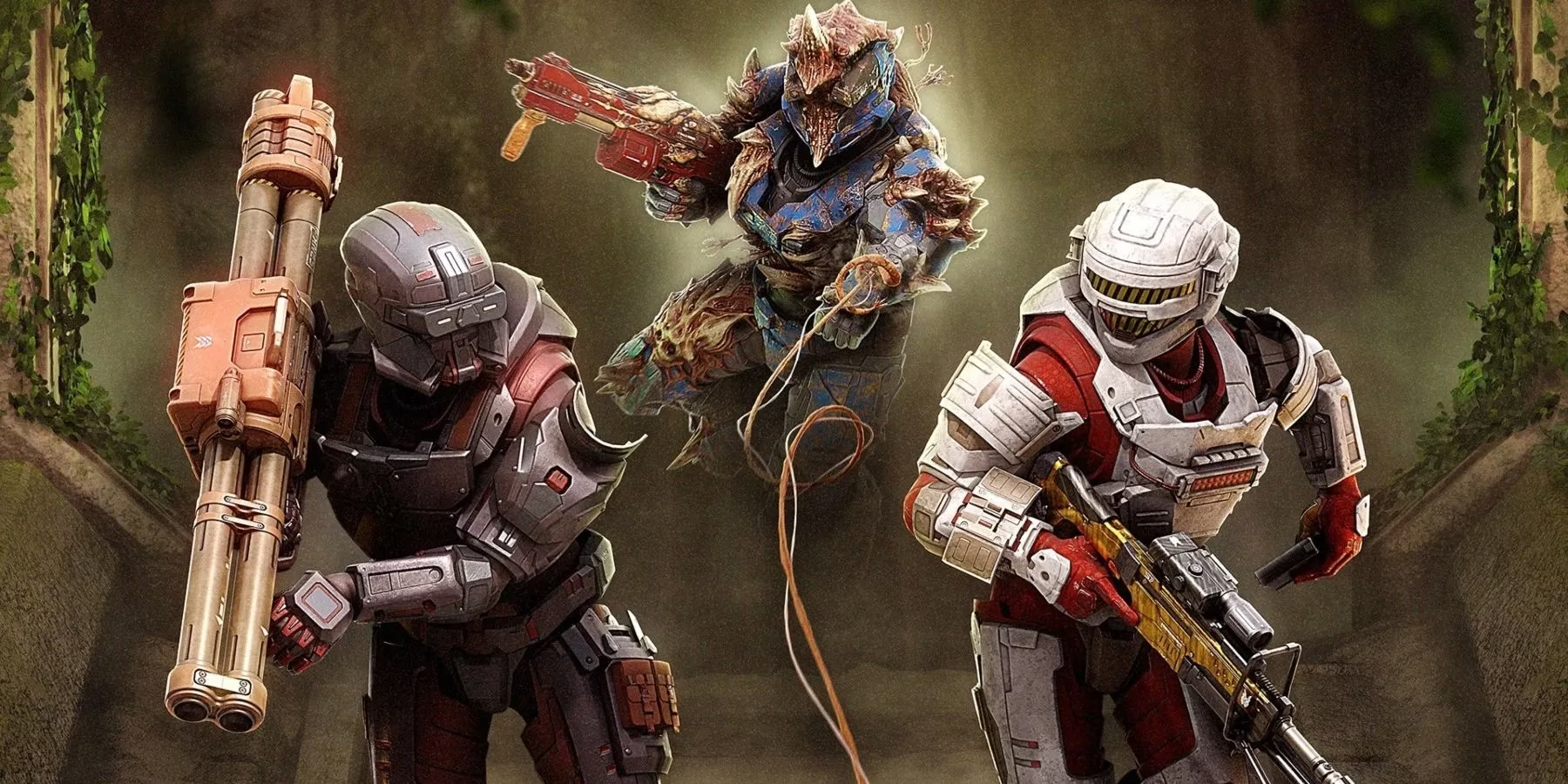
Let's rewind a bit. Halo's journey has been nothing short of a rollercoaster. From its genre-defining debut in 2001 to the challenges faced by Halo Infinite, the Master Chief's saga has seen its peaks and valleys. Meanwhile, Call of Duty has maintained a near-uninterrupted streak of commercial dominance, becoming a yearly cultural event. For years, the relationship was simple: they were the two giants you had to pick between. But Microsoft's staggering $69 billion move to bring Activision Blizzard into the fold changed everything. This isn't just about adding another studio to the portfolio; it's about bringing the king of console FPS (Halo) under the same roof as the undisputed king of the entire FPS market (Call of Duty). The regulatory hurdles were immense, but by 2026, the deal is a done deal, and the possibilities are exploding.
The most immediate and exciting prospect? Crossover content. Imagine logging into Call of Duty and seeing your squadmate drop in as the legendary Master Chief. 🤯 Or picture the Arbiter leading a Spec-Ops team in a future Modern Warfare title. This isn't just fan fiction anymore. Halo has already dipped its toes into these waters with successful crossovers like the Rainbow Six Siege event, where Operator Sledge got a full Master Chief makeover. Translating that success to the CoD ecosystem is a no-brainer. We could see:
-
Iconic Operators: Master Chief, the Arbiter, Sergeant Johnson.
-
Legendary Weapon Blueprints: The Battle Rifle, Energy Sword, or SPNKR rocket launcher reimagined for CoD's sandbox.
-
Warzone Vehicles: Imagine calling in a Pelican dropship or hijacking a Ghost for some high-speed chaos on the battlefield.
But it shouldn't be a one-way street! Halo could receive some love back from its new sibling.
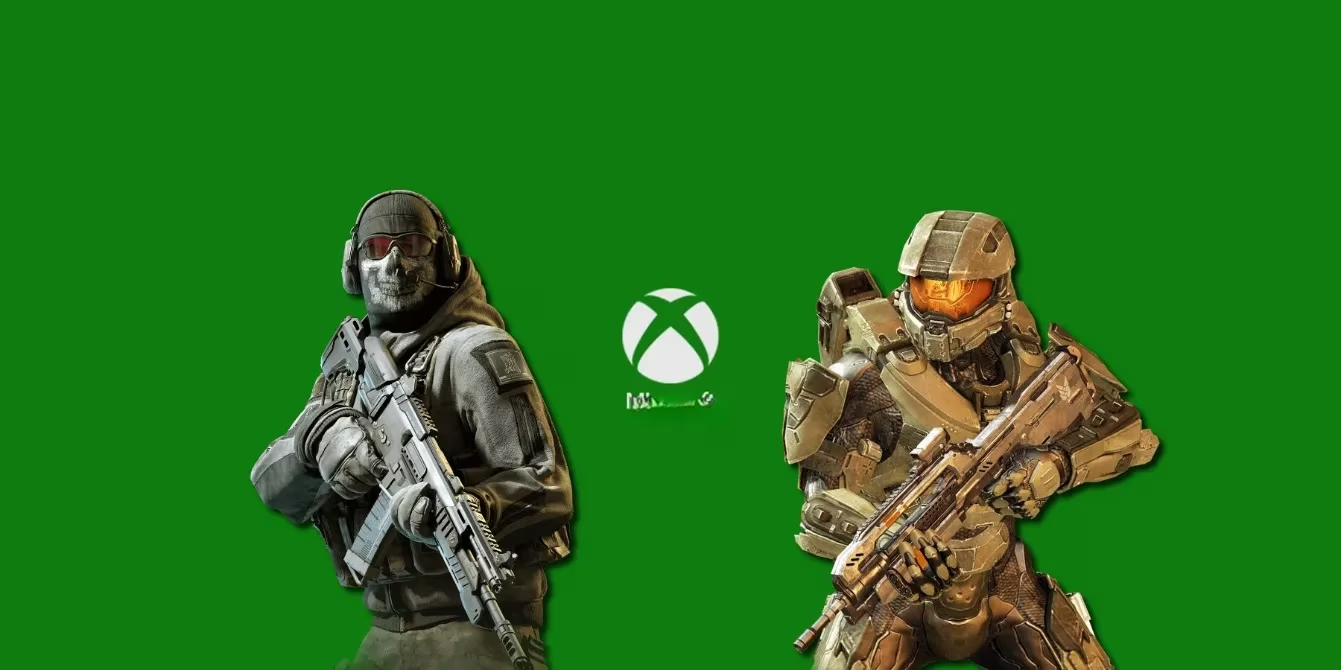
Picture this: a new Armor Core in Halo Infinite inspired by Task Force 141. Spartans rocking gear modeled after Ghost's iconic skull balaclava or Captain Price's signature look. The aesthetic clash between gritty modern military and advanced sci-fi armor would be incredibly cool. Microsoft could create a unified rewards system that encourages players to engage with both ecosystems. Complete a weekly challenge in Halo? Unlock a unique weapon charm or calling card in the latest Call of Duty. Grind a specific rank in Warzone? Earn a exclusive visor or coating for your Spartan. This symbiotic relationship would keep both player bases active and introduce fans of one franchise to the wonders of the other.
Looking beyond cosmetics, the potential for deeper integration is mind-boggling. Could we see a limited-time game mode? A "Grunts vs. Zombies" event? Or perhaps narrative tie-ins where a hidden ONI facility is discovered in a Call of Duty map, or references to the UNSC appear in intel files? The shared technology and resources under Microsoft could also lead to behind-the-scenes benefits. The stellar gunplay feel of Halo influencing future CoD titles, or the robust live-service lessons from CoD helping to shape Halo's ongoing content pipeline.
Of course, some purists might worry about brand dilution. Will Master Chief feel less special if he's also a playable character in another game? It's a valid concern. The key will be execution—ensuring these crossovers feel like celebratory events, not cheap marketing ploys. They must respect the legacy and tone of each franchise. A tactical, grounded Operator like Ghost fits the Halo universe better than, say, a flamboyant character from Black Ops Cold War's darker storylines.
Ultimately, the old paradigm of "Halo vs. Call of Duty" is fading. The new reality, solidified by 2026, is "Halo & Call of Duty." Their futures are now intertwined under the Microsoft banner. What was once a fierce rivalry for market share is transforming into a powerful partnership for player engagement. This isn't the end of their individual identities; it's the beginning of a new chapter where these legends can learn from each other and create experiences that were once thought impossible. The battle may be over, but the mission—to deliver incredible shooter experiences—is just getting started. For fans of both series, the next few years are going to be absolutely wild. 🔥