In 2026, science fiction games remain a laboratory for the most imaginative weapons in interactive entertainment. The genre can stretch from near-future speculation to space opera, alternate dimensions, and technology that exists only in a designer's sketchbook. Some concepts feel grounded, refining today's railguns and drones into tomorrow's battlefields. Others gleefully leap into unknown science, where psychic blades and biological horrors make equal sense. The franchises below each offer a distinct spin on warfare, and together they form a kind of armory for the impossible. As Albert Einstein supposedly never said about World War III, the weapons may be unimaginable — but game developers have plenty of ideas.

StarCraft: Ballistics, Beasts, and Crystal Tech
StarCraft's Terrans prove that humanity in the far future still loves a good bullet. They cloak, they nuke, and they improvise. The Zerg take a different route: their soldiers are the weapons, grown tougher, faster, and more numerous than anything with a trigger. The Protoss are pure science fiction, warping in pre-fabricated structures and wielding psychic powers, laser swords, and crystal technology. It is not always clear how their systems work, but the results are among the most advanced in gaming.

Dead Space: Engineering Tools as Dismemberment Devices
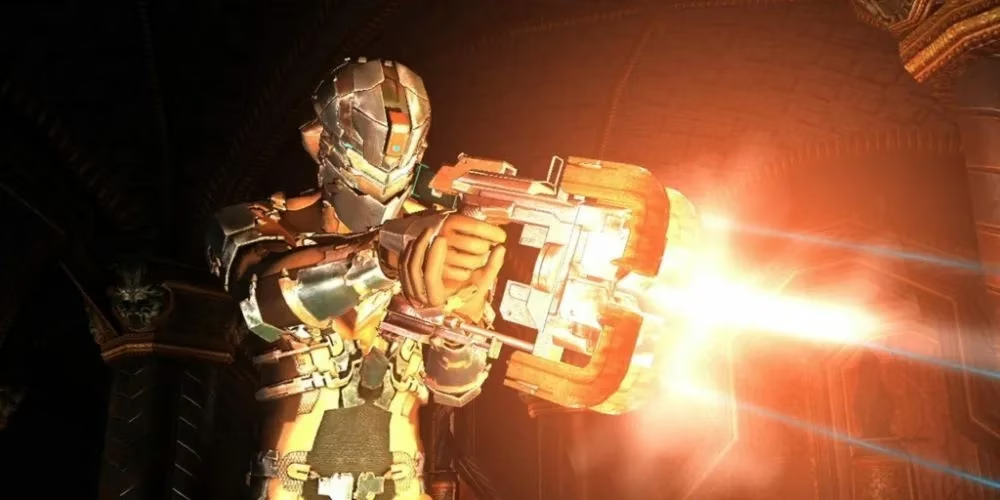
Dead Space gives its futuristic arsenal a blue-collar twist. Isaac Clarke is an engineer, not a soldier, so his weapons are repurposed power tools. The plasma cutter, the line gun, and the harpoon are designed to slice limbs from Necromorphs, because dismemberment is the only reliable way to stop them. The setting treats telekinesis and stasis as mundane utilities: one can launch objects at enemies, the other can slow them to a crawl. It is a rare universe where a mining laser feels more terrifying than a military rifle.
Doom: Argent Energy and the BFG
Doom has changed less than one might expect since 1993. Bullets, shells, and rockets still do the heavy lifting, but the plasma rifle and the iconic BFG push the arsenal into wilder territory. The BFG is less a firearm than a portable apocalypse with a shoulder stock. Each blast harnesses argent energy from a hell dimension, launching a sphere of destruction that erases most enemies and leaves even powerful demons badly wounded. The series understands that sometimes the best futuristic weapon is simply a bigger, angrier explosion.

Halo: Plasma, Hard Light, and Spartan Adaptability
Halo's Spartans are humanity's greatest heroes, but they are also scavengers by necessity. They may prefer futuristic rifles and machine guns, yet they adapt without complaint to Covenant plasma weapons, Brute projectile explosives, and Forerunner hard light technology. Plasma superheats material and overloads shields with ease, burning through armor beneath. Forerunner weapons use light itself as a blade or a bullet. In the Halo universe, any of these tools can be deadly in the right hands — and the right hands are usually wearing MJOLNIR armor.

Predator: The Hunt as a Weapons Restraint
In Predator, the glory of the hunt matters more than the kill. Young hunters stalk their prey with the least amount of weaponry they can carry, turning warfare into a sport. They cloak, fire energy beams, and view different light spectrums to track victims. The Predator's toolkit is like a chess grandmaster who brings only a pawn to prove a point. If these are the weapons they consider weak enough to make a hunt sporting, their true technological level must be far beyond anything seen in the games.

Star Trek Online: Phasers, Photon Torpedoes, and Weird Alien Tech
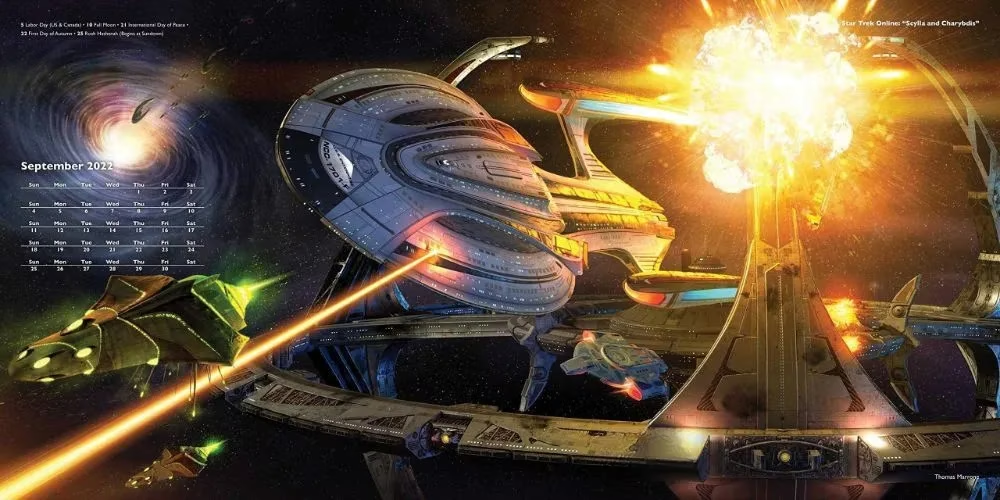
Star Trek games often put phasers and photon torpedoes in the hands of Federation officers, but the enemies get the stranger toys. The Borg fly in simple geometric shapes and rely on highly advanced technology to overwhelm opposition. The Undine use psionic biotechnology. Starships across the franchise come in myriad designs with unusual capabilities, and the ideas behind alien development are impressive even when they are not flashy. It is a reminder that in science fiction, a cube can be scarier than a superweapon.
Star Wars Jedi: Fallen Order: Blasters and Lightsabers
The Star Wars universe supposedly existed a long time ago, yet its technology still outpaces humanity's own. Blasters fire bolts of energy, and lightsabers are elegant energy swords that cut through almost anything. The Force may be a Jedi's primary weapon, but Cal Kestis is handy with a lightsaber, using it to defeat the most advanced technology available. The lightsaber is a river of light frozen into a blade, and it remains iconic precisely because it is impossible: a beam that can deflect lasers and sever steel in the same motion.

Turok: Emaciator and Cerebral Bore
Turok may not have made a huge splash with its 2008 reboot, but the franchise earns a place in any discussion of strange future weapons. The Emaciator reduces an enemy's body mass until they simply cease to exist. The Cerebral Bore fires a drill into a victim's skull and explodes seconds later. These weapons took science fiction violence up to eleven, and they remain a reminder that not every futuristic arsenal needs to be practical. Some just need to be unforgettable.

Mass Effect: Railgun-like Weapons and Element Zero
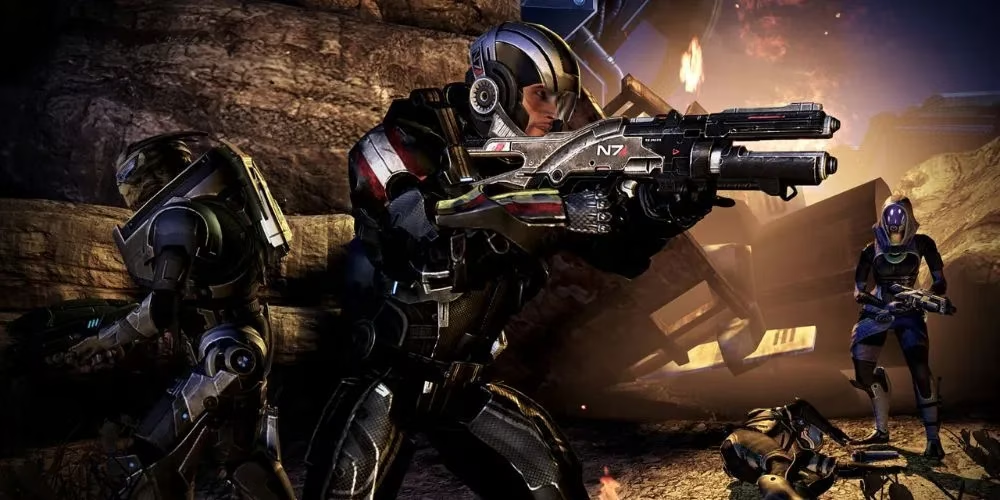
Mass Effect's lore is more grounded than many space operas, but it still runs on abilities beyond present-day humanity. Almost every weapon emits slivers of metal taken from a single block inside the gun and fires them through mass generation like a railgun. The more fictional element is Element Zero, which enables much of the technology and allows humans and other species to use biotics — a deadly pseudo-magic. Mass Effect's guns are essentially a stapler that fires staples at supersonic speeds; the miracle is not the ammunition, but the impossible geometry that throws it.
Fallout: Lasers, Plasma, and the Fat Man
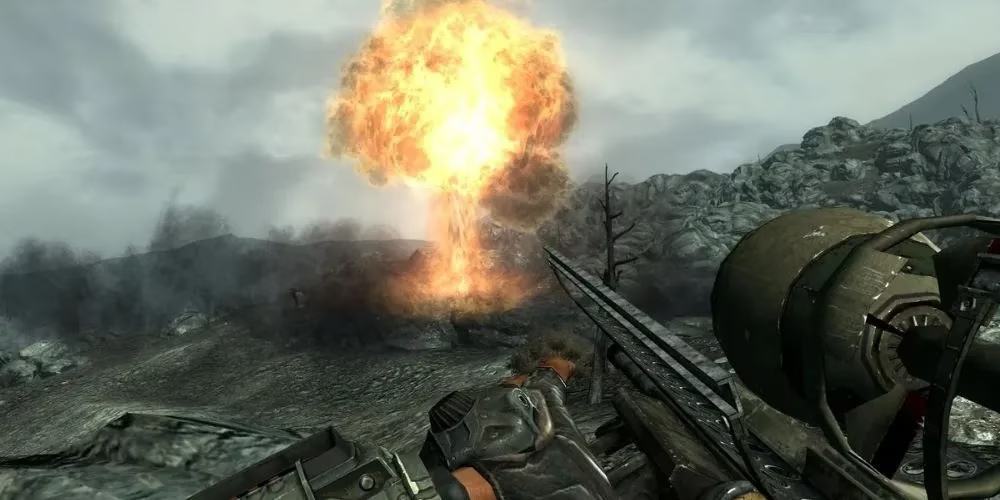
Fallout has never shied away from unusual weaponry. Lasers and plasma weapons sit beside chainsaw swords and the iconic Fat Man, a shoulder-mounted micro-nuclear warhead launcher. The Fat Man is theoretically possible and was even developed in the 1950s as the Davy Crockett launcher. However, while a shoulder-mounted nuclear weapon can be built, it probably is not a good idea. Fallout embraces that contradiction: the future is absurd, dangerous, and often radioactive.
What These Arsenals Have in Common
These franchises differ wildly, but they share a willingness to treat weapons as extensions of worldbuilding. A plasma rifle says something about a faction's energy grid. A biological horror says something about evolution. A lightsaber says something about philosophy. In 2026, players can still see these ideas echoed in new releases, but the classics remain the reference points.
| Franchise | Signature weapon or tech | Why it stands out |
|---|---|---|
| StarCraft | Psychic powers, crystal warp tech, nukes | Three races, three completely different philosophies of war |
| Dead Space | Plasma cutter, stasis, telekinesis | Power tools turned into survival horror weapons |
| Doom | BFG, plasma rifle, argent energy | Hell-powered destruction with a trigger |
| Halo | Plasma, hard light, Spartan armor | Adaptation is the real superpower |
| Predator | Cloaking, energy beams, thermal vision | Restraint makes the hunt more terrifying |
| Star Trek Online | Phasers, photon torpedoes, Borg cubes | Alien tech can be strange and intimidating |
| Star Wars Jedi | Lightsaber, blaster, the Force | Elegant impossible weapons define a galaxy |
| Turok | Emaciator, Cerebral Bore | Violence pushed to absurd, memorable extremes |
| Mass Effect | Mass accelerators, Element Zero, biotics | Hard sci-fi foundation with pseudo-magic on top |
| Fallout | Fat Man, lasers, plasma | Retro-futurism with a radioactive sense of humor |
Ultimately, science fiction games are not just about bigger guns. They are about asking what war might become if physics, biology, and imagination were allowed to run wild. Some answers are grounded, some are ridiculous, and some are terrifying. That is exactly why the genre's arsenals remain so memorable.